Skip to content Skip to footer
Join our LinkedIn Group and be part of the conversation on AI in life sciences Subscribe to our YouTube channel for the latest MadeAi product updates
Future of Systematic Literature Reviews

The Future of Systematic Literature Reviews is AI-Assisted, Not AI-Automated

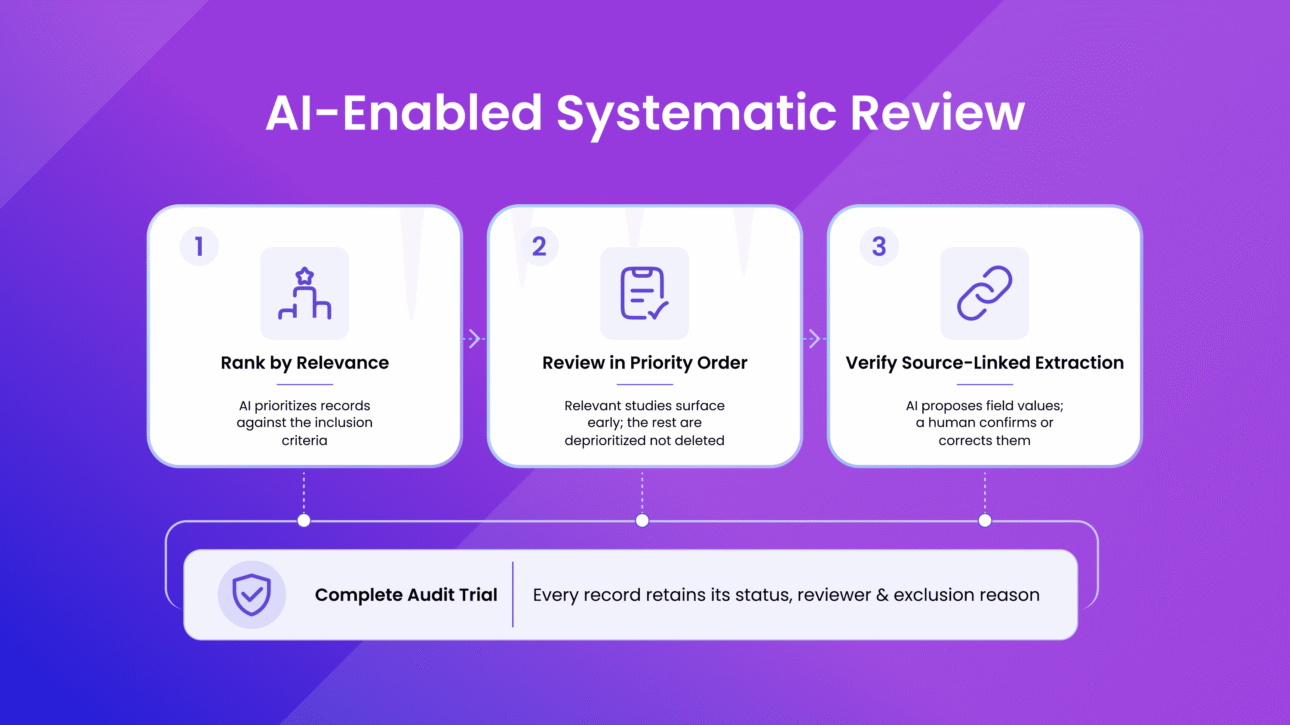
Overview The future of Systematic Literature Reviews (SLRs) depends on thoughtful integration of technology rather than complete replacement of expert judgment. SLRs remain the foundation for reliable evidence synthesis across healthcare, technology assessment, and policy. The volume of published studies continues to expand, placing heavy demands on research teams that must deliver timely, transparent, and…
Read More

The Hidden Cost of Manual Literature Reviews, and How AI Changes the Math

The Hidden Cost of Manual Literature Reviews, and How AI Changes the Math

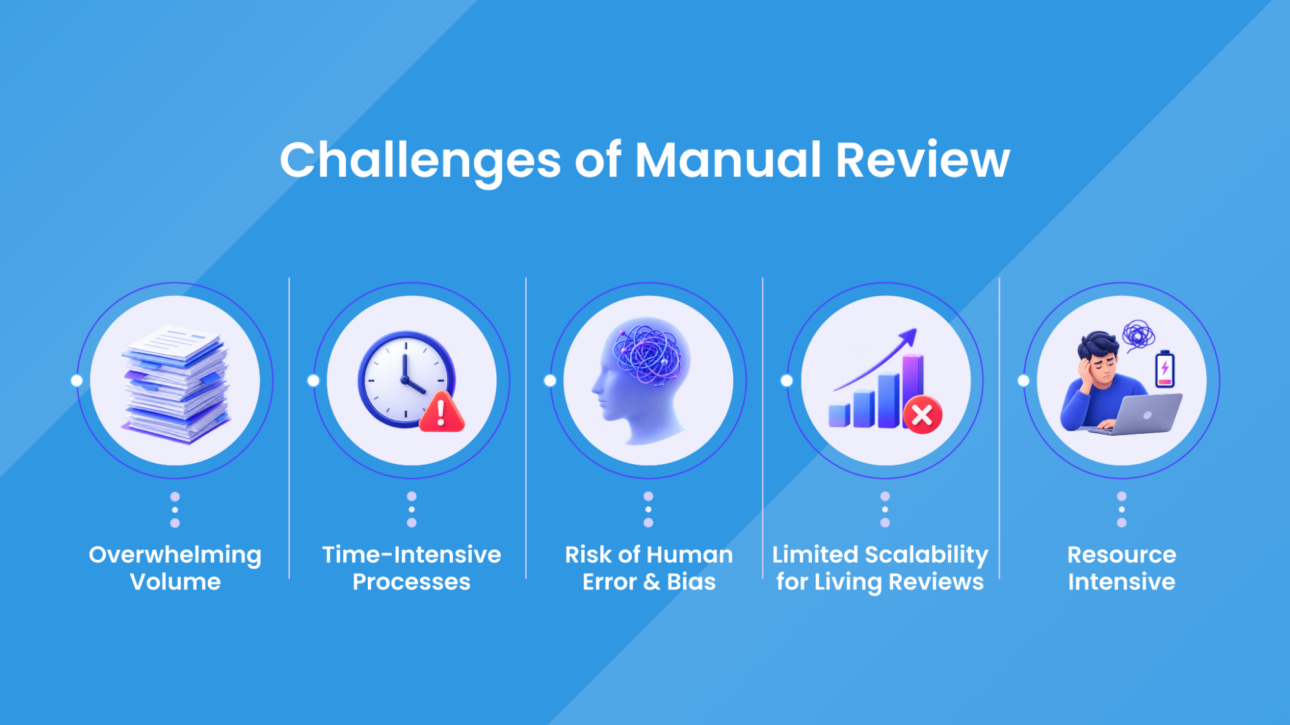
What Manual Literature Reviews Cost, and Where the Money Goes Manual systematic literature reviews remain the backbone of evidence-based decisions in healthcare, policy, and research. Teams follow strict protocols, search multiple databases, screen thousands of records, extract data by hand, and synthesize findings. The method delivers high-quality results. Yet the true price of this work…

Read More

Revolutionizing Protocol

Revolutionizing Protocol Generation: How Agentic AI Drafts Compliant Plans in Minutes

Consider a cross-functional team huddled around spreadsheets, regulatory guidelines, and past trial data, spending weeks or sometimes months crafting a single clinical trial protocol; see protocol structure details. Every inclusion criterion, endpoint, and safety measure must align perfectly with ICH-GCP standards, FDA expectations, and real-world feasibility. One misalignment, and you risk costly amendments, delayed starts,…

Read More

AI for Patient-Reported Outcomes

How AI is Scaling Patient-Reported Outcomes into Structured, Submission-Ready Evidence

Scaling Patient-Reported Outcomes In the world of clinical research and drug development, patients’ own voices matter more than ever. Patient-reported outcomes (PROs) capture how people actually feel, their symptoms, quality of life, side effects, and daily functioning. Yet turning these often messy, free-text or survey responses into clean, structured data that regulators can trust has…

Read More