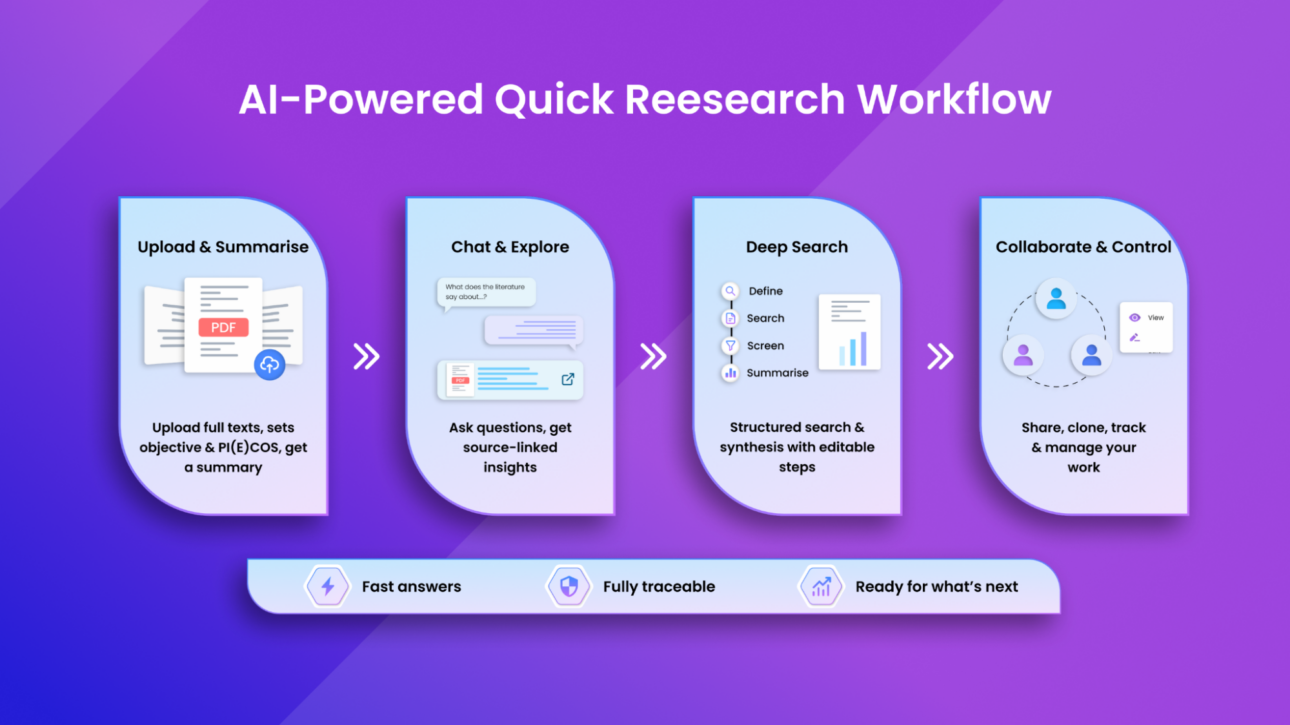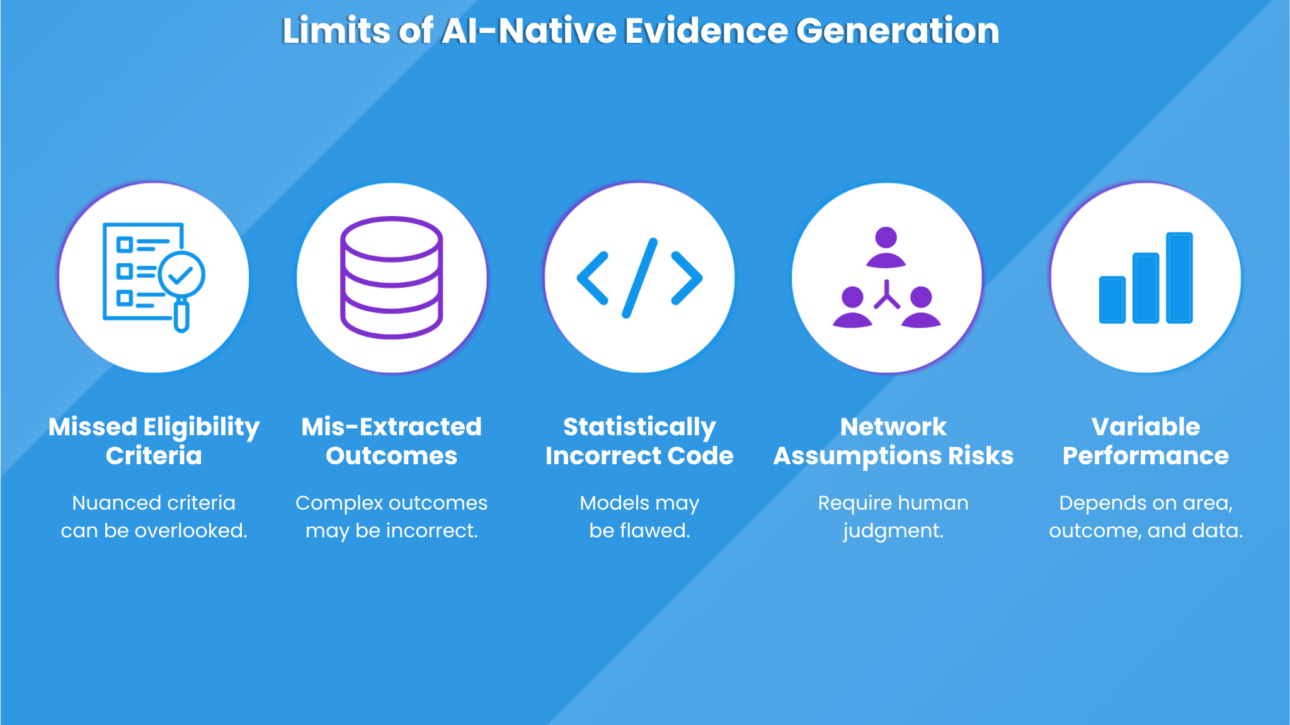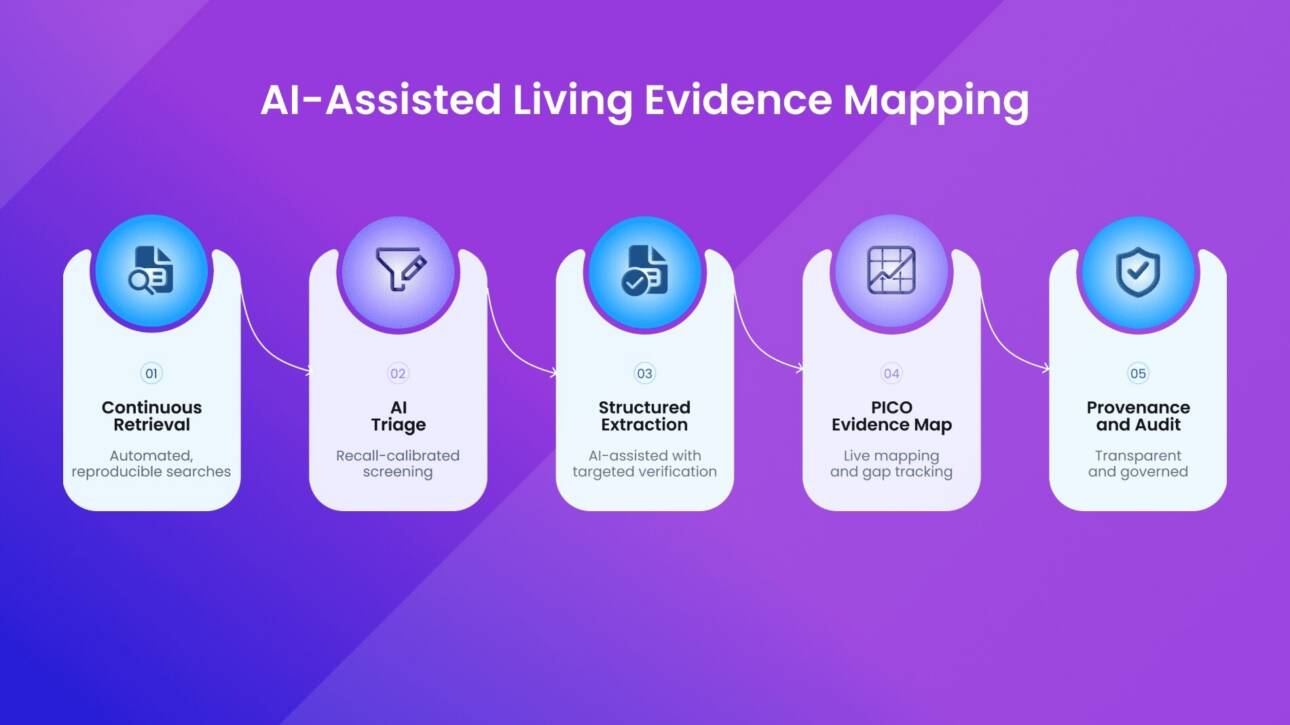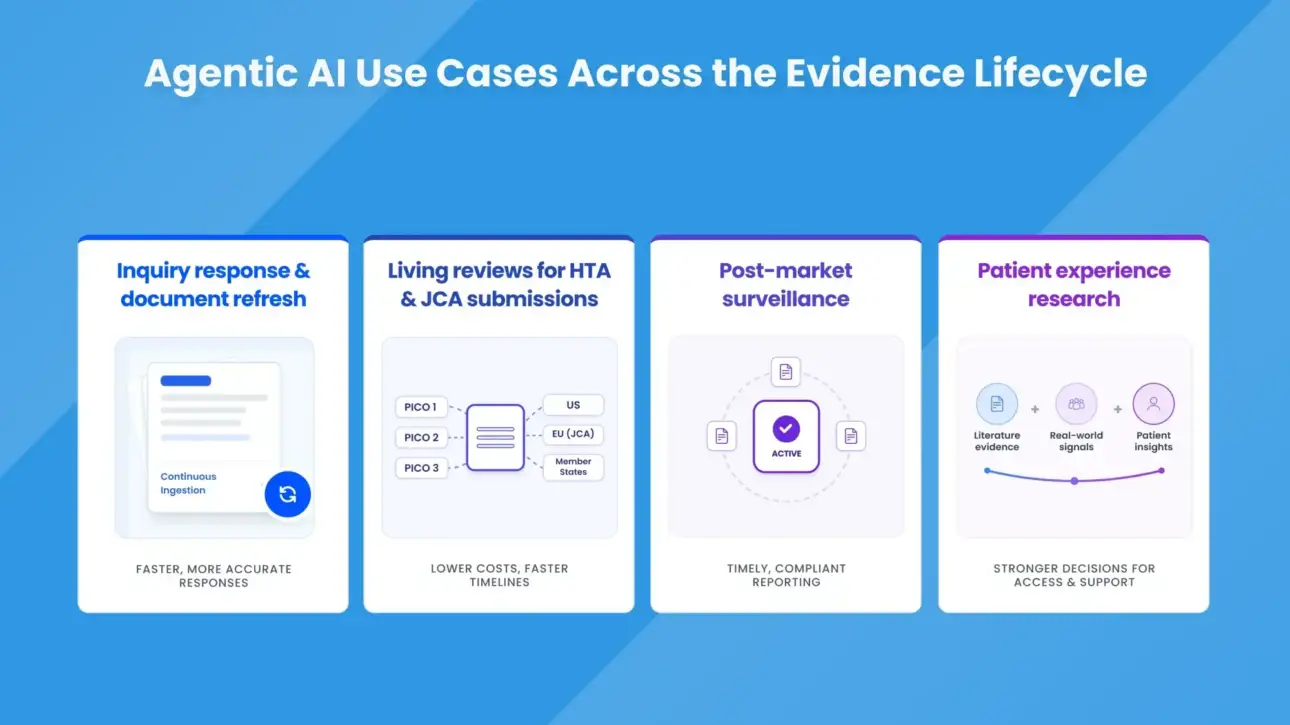
AI-augmented literature reviews are transforming evidence generation across life sciences. This blog explores multi-project analysis of AI-assisted literature reviews. It examines improvements in review speed, screening accuracy, traceability, and workflow efficiency while maintaining rigorous human oversight for submission-ready outcomes. For teams in health economics and outcomes research (HEOR), regulatory affairs, and evidence generation, systematic literature…
AI-Assisted Drug Repurposing What if the next breakthrough treatment is already available today, hidden within existing drugs and waiting to be discovered? This question drives the growing field of AI-assisted drug repurposing, a smart and cost-effective strategy that looks for new therapeutic uses for approved medications. Unlike traditional drug development, which can cost billions and…
What is AI-assisted literature screening for Class II medical devices? AI Literature Screening for Medical Devices is the application of artificial intelligence to identify, review, classify, and prioritize scientific literature relevant to a medical device. This reduces the manual effort required for evidence generation and regulatory review workflows. For instance, AI analyzes titles, abstracts, and…
Why the Industry is Testing the Wrong Thing The life sciences industry faces a growing paradox: organizations are investing heavily in AI, yet many evaluation methods fail to measure how these systems actually perform in real-world evidence synthesis workflows. Every week, new evaluations emerge, and task forces publish guidelines. Academic papers rank AI tools. Organizations…
The Systematic Literature Review Definition: Systematic Literature Review (SLR) is a rigorous, structured, and transparent process of identifying, analyzing, and synthesizing all existing research on a clearly defined question or topic, providing a comprehensive summary and critical evaluation of the evidence. If you’ve ever tried to pull together evidence for a big research question, you’ll…
Today’s Reality vs. Future of Medical Affairs Imagine a seasoned oncologist in her clinic, preparing for morning rounds. Two decades ago, understanding the safety profile of a novel compound often meant waiting for a Medical Science Liaison (MSL) to deliver a curated slide deck. The MSL acted as a highly credible, yet fundamentally transactional, data…