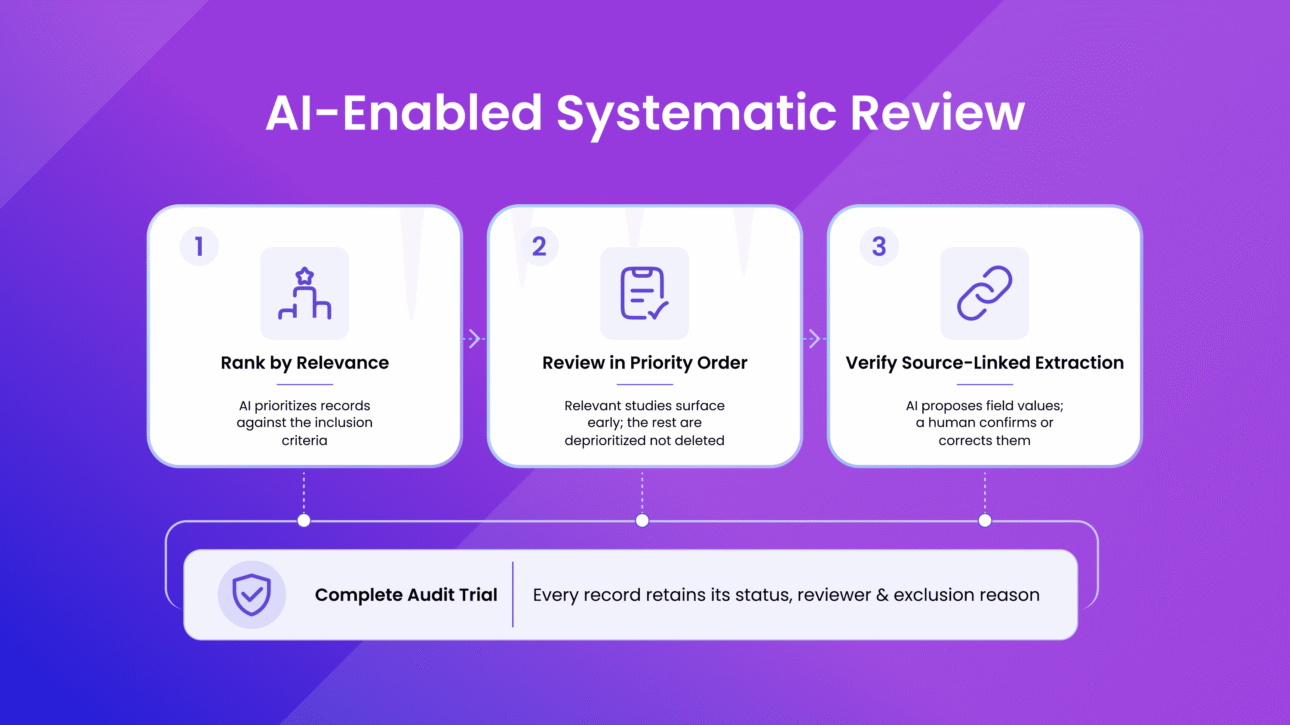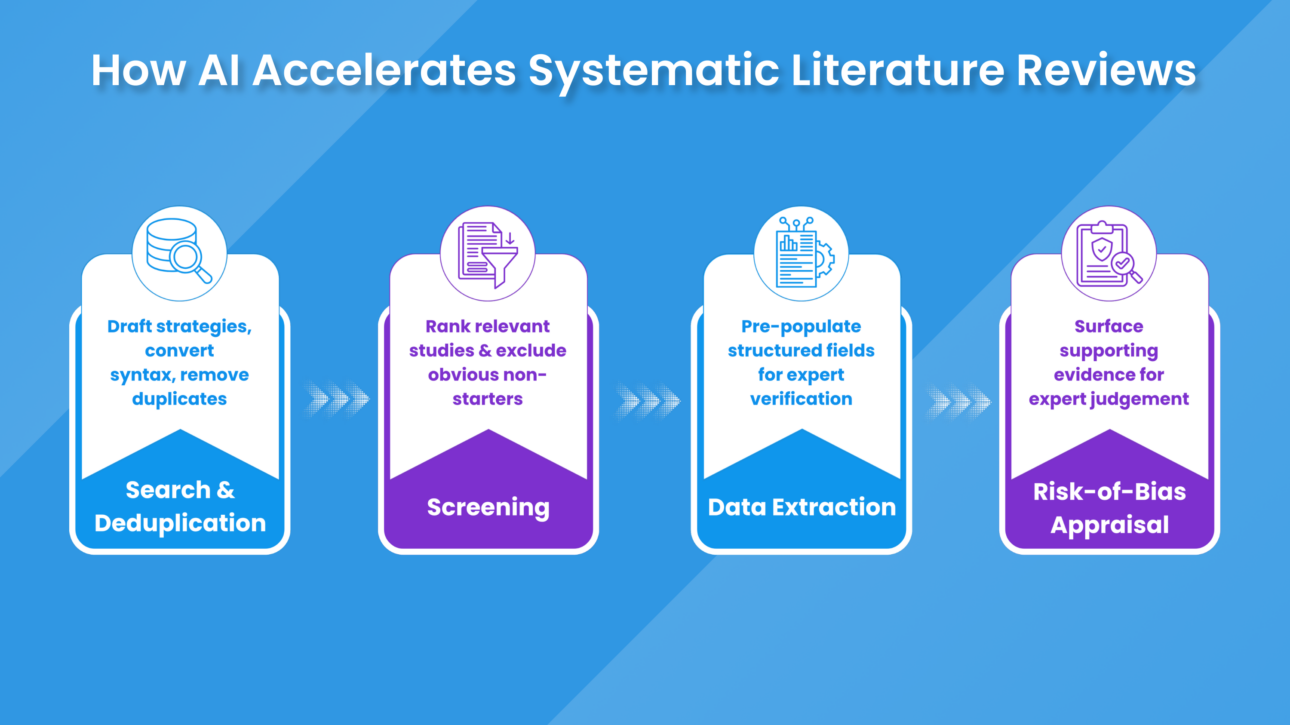
Overview The future of Systematic Literature Reviews (SLRs) depends on thoughtful integration of technology rather than complete replacement of expert judgment. SLRs remain the foundation for reliable evidence synthesis across healthcare, technology assessment, and policy. The volume of published studies continues to expand, placing heavy demands on research teams that must deliver timely, transparent, and…
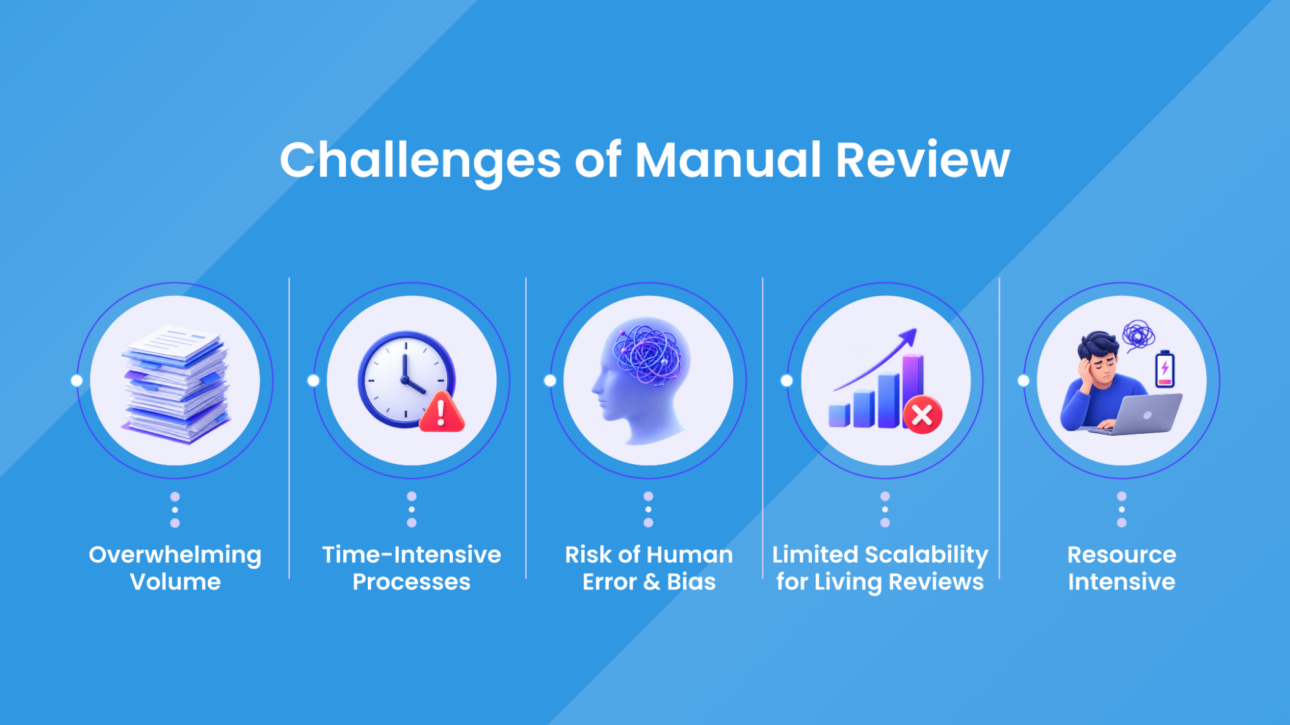
What Manual Literature Reviews Cost, and Where the Money Goes Manual systematic literature reviews remain the backbone of evidence-based decisions in healthcare, policy, and research. Teams follow strict protocols, search multiple databases, screen thousands of records, extract data by hand, and synthesize findings. The method delivers high-quality results. Yet the true price of this work…
Why the Systematic Literature Review Timeline Still Runs Into Months A typical systematic literature review (SLR) timeline is measured in quarters, not weeks, and the reason is rarely a lack of effort. Borah and colleagues tracked reviews registered on PROSPERO and found a median of 67.3 weeks from registration to publication (BMJ Open, 2017). As…
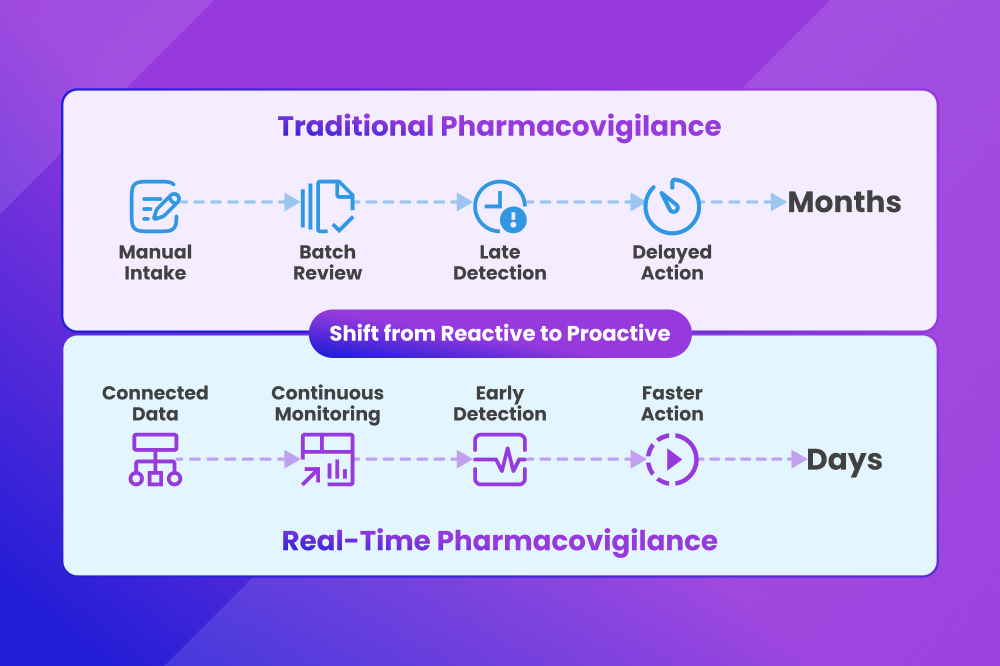
Imagine a world where drug safety isn’t just about responding to problems after they occur, but it’s about predicting and preventing them before patients are at risk. For decades, traditional pharmacovigilance (PV) has functioned like a fire alarm system: it activates only once the smoke appears. Adverse drug reactions (ADRs) are collected through Individual Case…
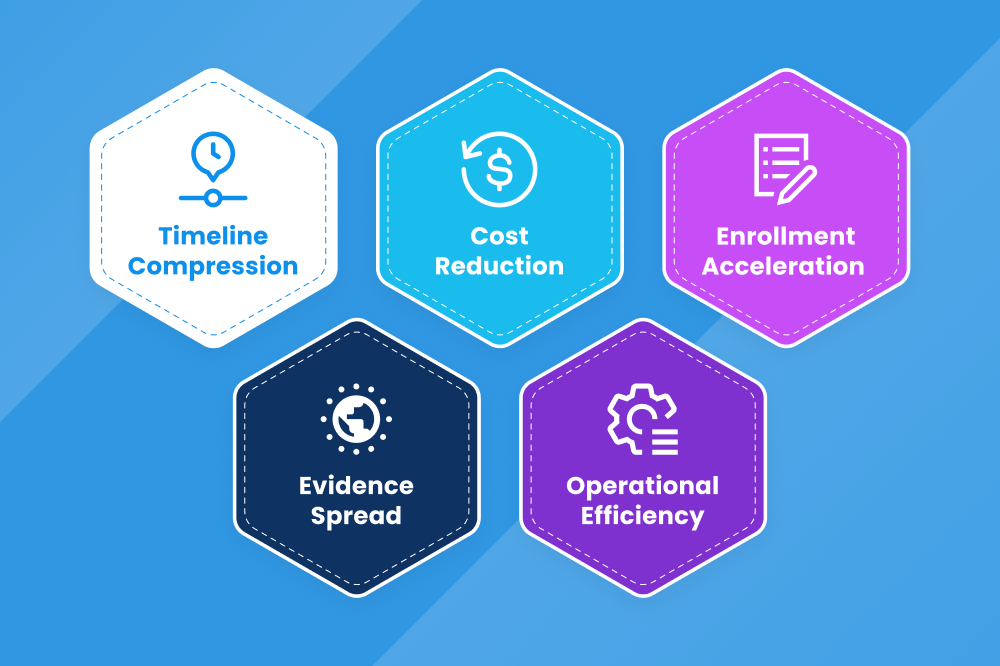
For years, the pharmaceutical industry has followed a familiar evidence cycle. Teams design a clinical trial, execute it, lock the database, analyze the results, and wait for another study to address remaining questions. They wait for post-market surveillance to reveal real-world outcomes and for regulators or payers to request additional data before reimbursement decisions. However,…
The pharmaceutical industry is currently at a pivotal moment in the AI landscape. After years of cautious AI experimentation limited to isolated labs and pilot programs, something fundamentally different is unfolding in 2026. The central question has shifted from “Does AI work?” to “How do we deploy it safely and at scale?” especially in organizations…