Skip to content Skip to footer
Join our LinkedIn Group and be part of the conversation on AI in life sciences
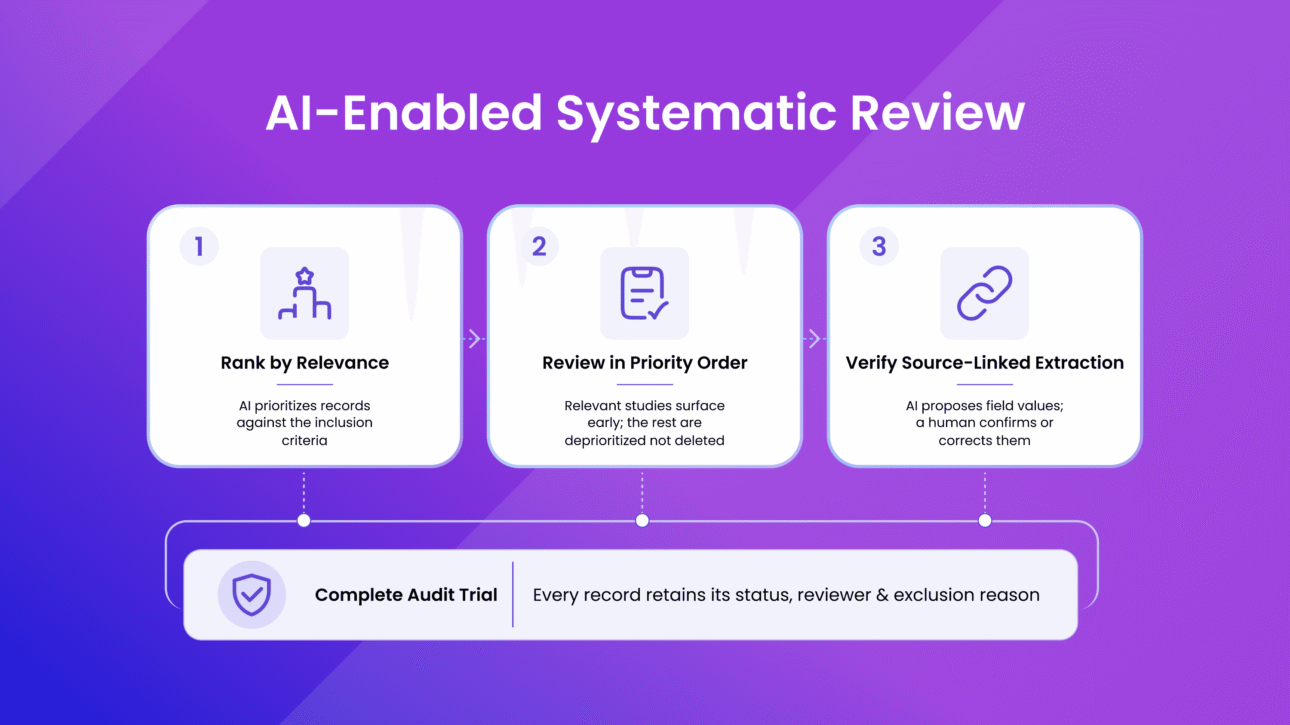
AI vs Traditional Systematic Literature

AI-Assisted vs. Traditional Systematic Literature Reviews: A Comparative Analysis

Overview AI vs. traditional systematic literature reviews (SLRs) is a question evidence teams now face daily, not just in academic debate. An SLR is a structured process for reviewing available research on a defined question. It includes identifying, screening, appraising, and synthesizing relevant studies. It follows a pre-registered protocol, such as the one described in…

Read More

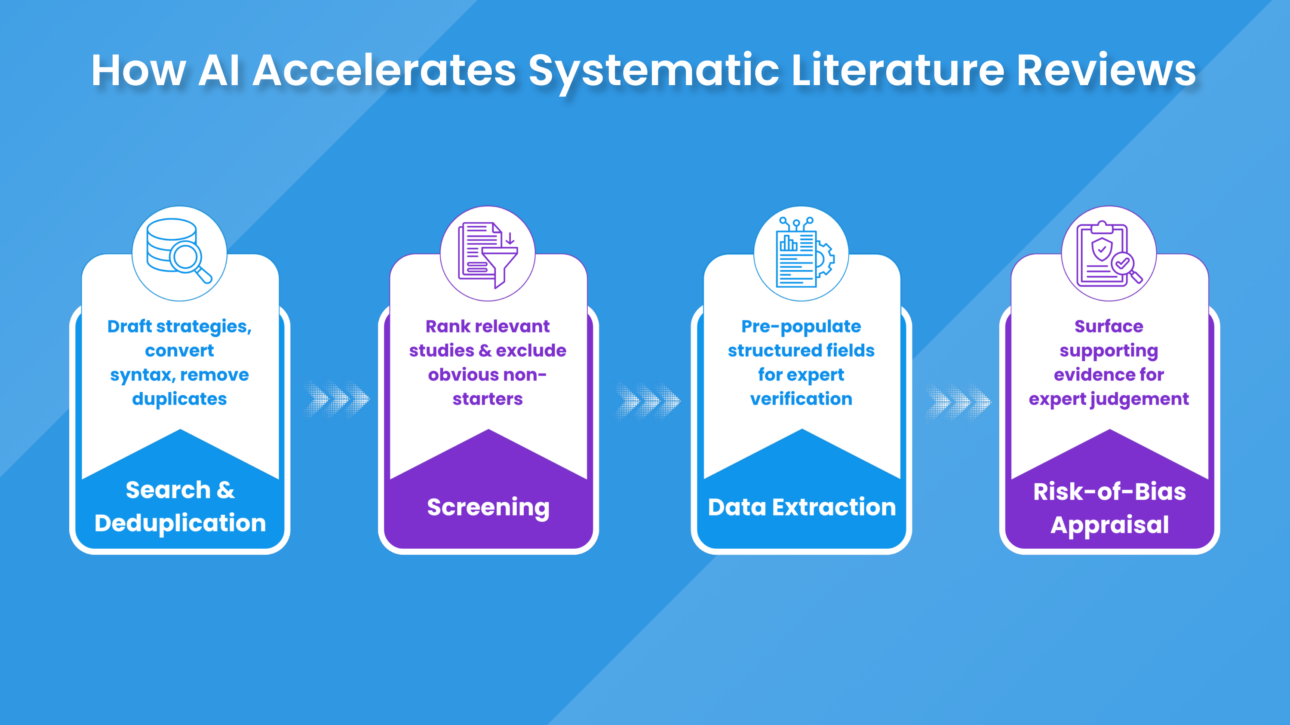
Future of Systematic Literature Reviews

The Future of Systematic Literature Reviews is AI-Assisted, Not AI-Automated

Overview The future of Systematic Literature Reviews (SLRs) depends on thoughtful integration of technology rather than complete replacement of expert judgment. SLRs remain the foundation for reliable evidence synthesis across healthcare, technology assessment, and policy. The volume of published studies continues to expand, placing heavy demands on research teams that must deliver timely, transparent, and…

Read More

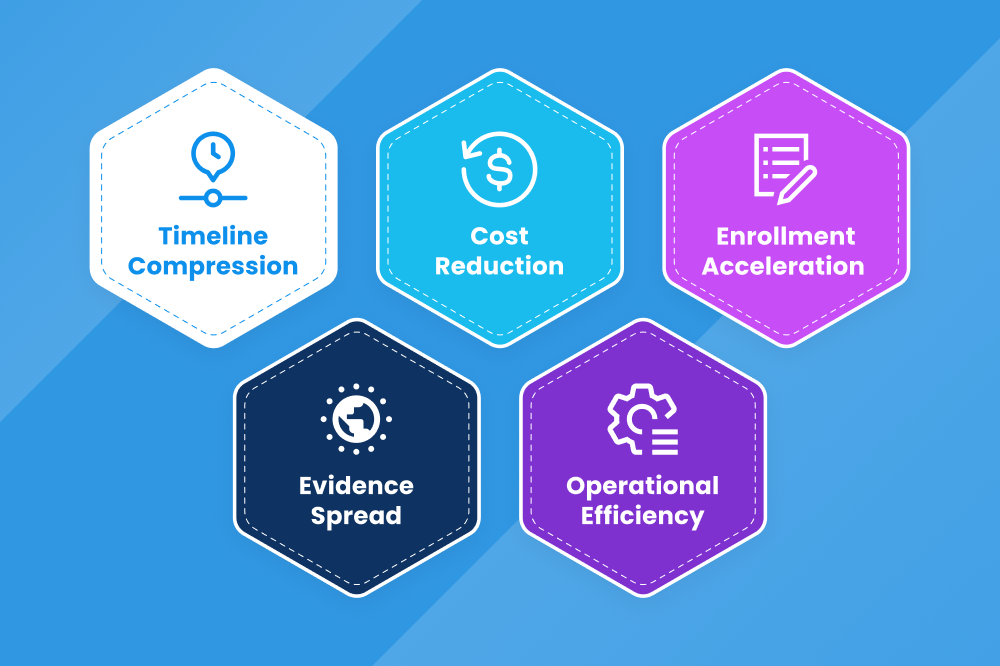
The Hidden Cost of Manual Literature Reviews, and How AI Changes the Math

The Hidden Cost of Manual Literature Reviews, and How AI Changes the Math

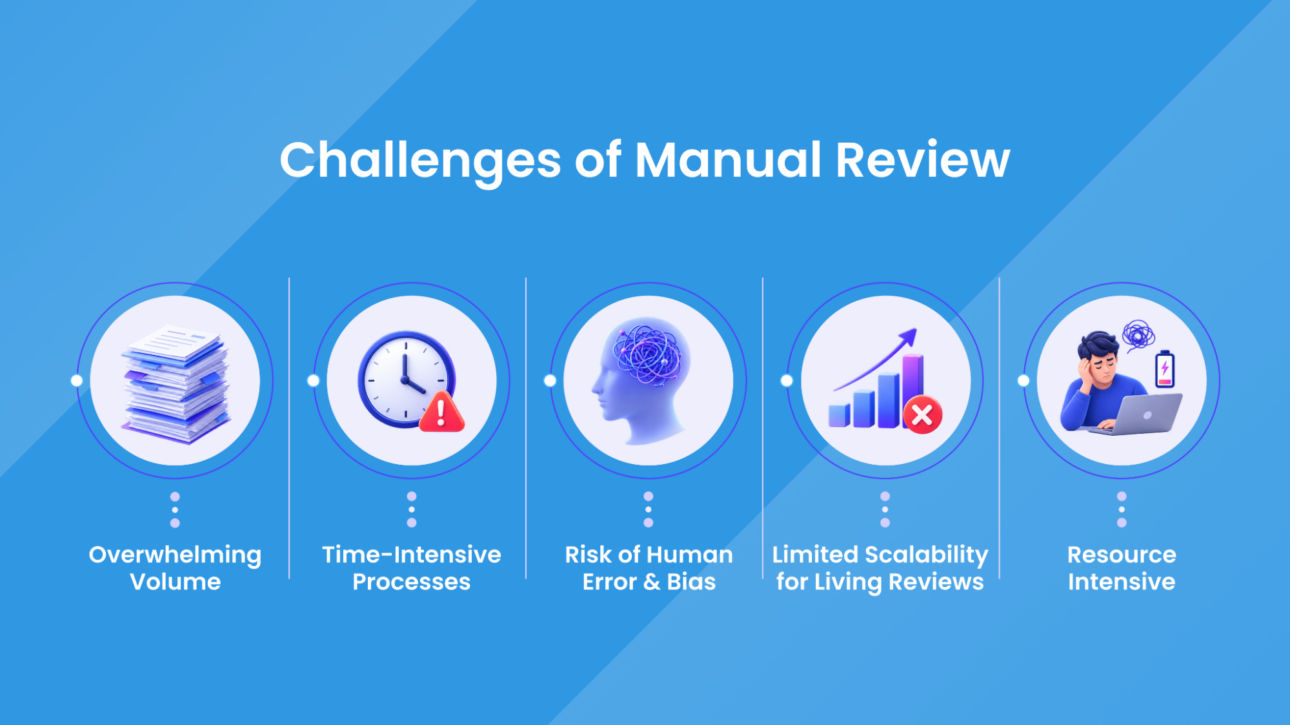
What Manual Literature Reviews Cost, and Where the Money Goes Manual systematic literature reviews remain the backbone of evidence-based decisions in healthcare, policy, and research. Teams follow strict protocols, search multiple databases, screen thousands of records, extract data by hand, and synthesize findings. The method delivers high-quality results. Yet the true price of this work…

Read More

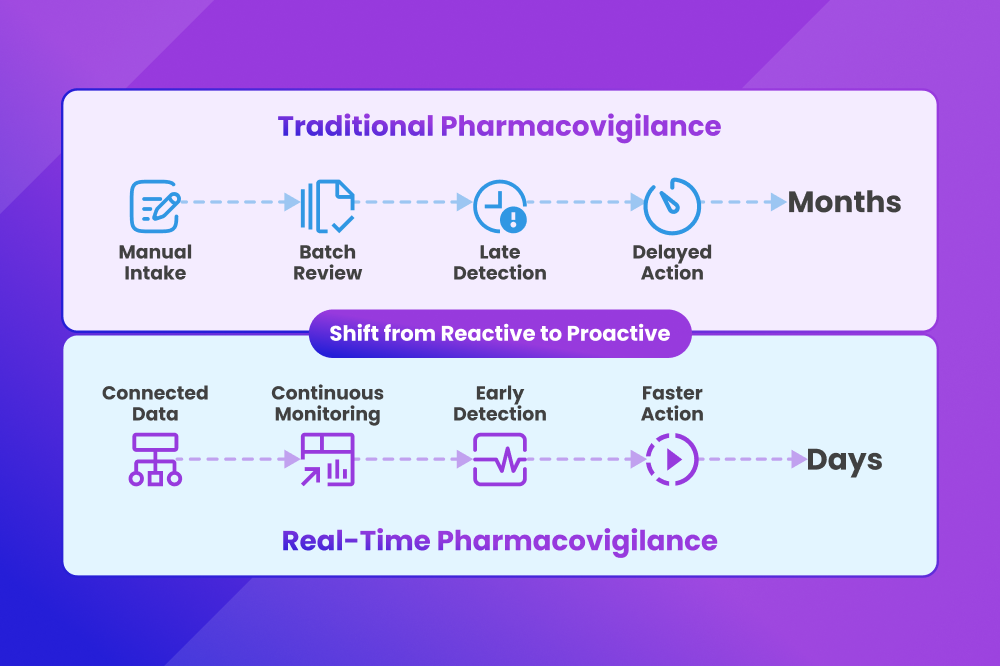
Agentic AI Driving the Next Phase of Continuous Evidence Generation in Pharma

2026 Prediction #4: Agentic AI Driving the Next Phase of Continuous Evidence Generation in Pharma

For years, the pharmaceutical industry has followed a familiar evidence cycle. Teams design a clinical trial, execute it, lock the database, analyze the results, and wait for another study to address remaining questions. They wait for post-market surveillance to reveal real-world outcomes and for regulators or payers to request additional data before reimbursement decisions. However,…

Read More