

CapeStart's Literature Review Research Report examines how life sciences professionals approach literature reviews, exploring their methodologies, challenges, and resource allocation between internal and external teams. The study investigates key aspects including goals, scope, complexity management, and success metrics, while also analyzing information sources and professional associations, along with demographic data from survey respondents.
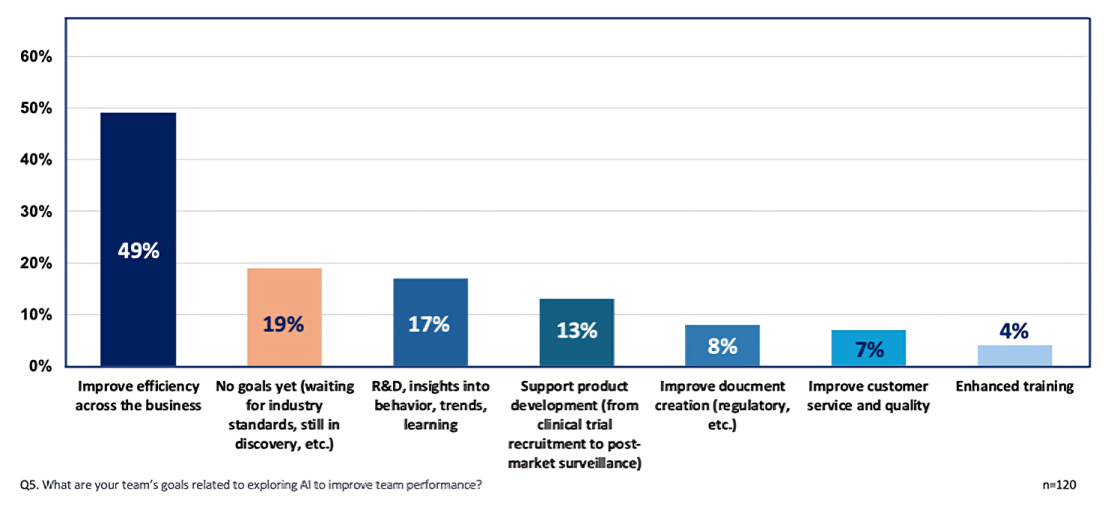
CapeStart's Life Sciences AI Research Report investigates how professionals in the life sciences sector view and utilize artificial intelligence technologies in their work. The study explores current AI implementations and capabilities, while examining organizational goals and targeted impact areas for AI integration. The report analyzes key challenges and obstacles teams face in AI adoption, along…
CapeStart helped a major multinational digital health company develop a multi-omic, AI-powered classifier to predict patient responses to checkpoint inhibitors. Checkpoint inhibitors are a class of immuno-oncology agents often used to treat solid tumors. The client needed a reliable, knowledgeable, experienced and affordable partner to analyze and label a large batch of de-identified multislice CT images.…
Artificial intelligence (AI) has significantly impacted the pharmaceutical business in several ways, from drug discovery and formulation to clinical trials and monitoring for adverse drug reactions. But AI can also help improve pharma manufacturing, distribution, and supply chain management by improving efficiency, safety, quality, and other processes. Here’s how AI can be used to improve…
A major healthcare provider needed an experienced, innovative partner to help the development of an AI-based natural language processing (NLP) classifier. The client’s goal was to use the classifier to automatically identify and categorize Breast Imaging Reporting and Data System (BI-RADS) scores, by extracting and understanding text from a dataset of breast radiology reports. However,…