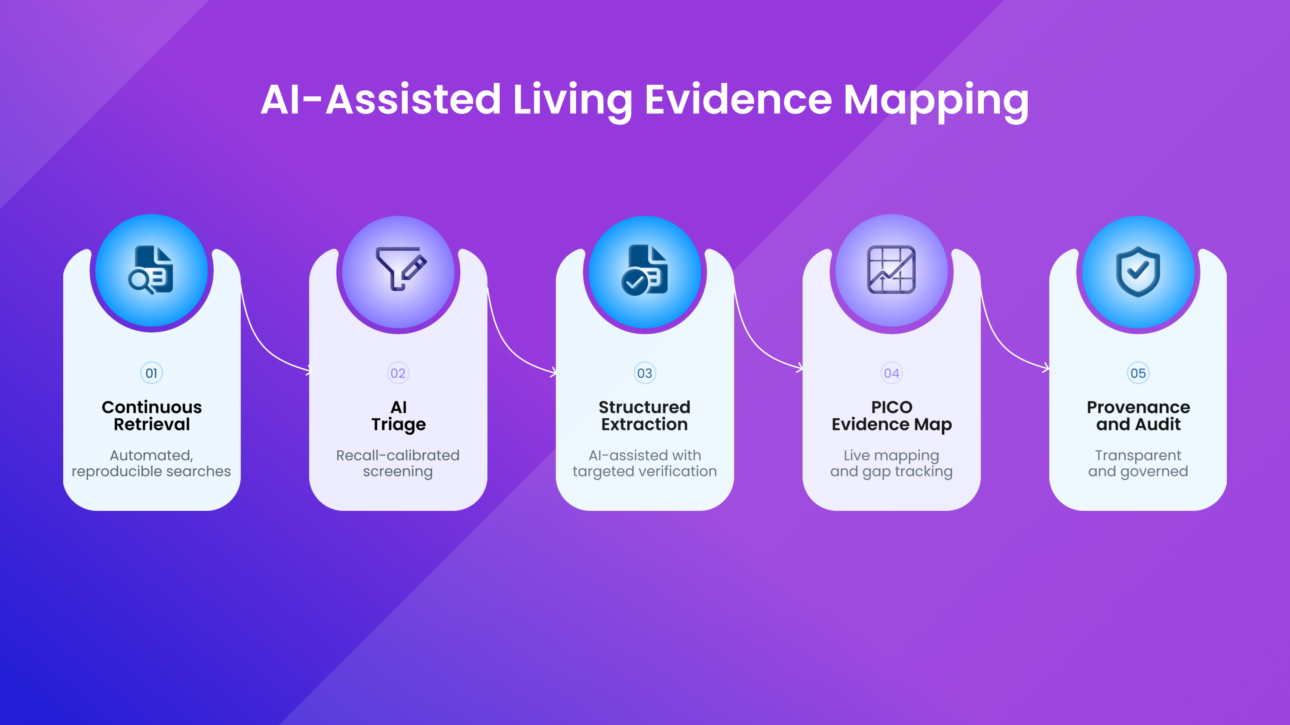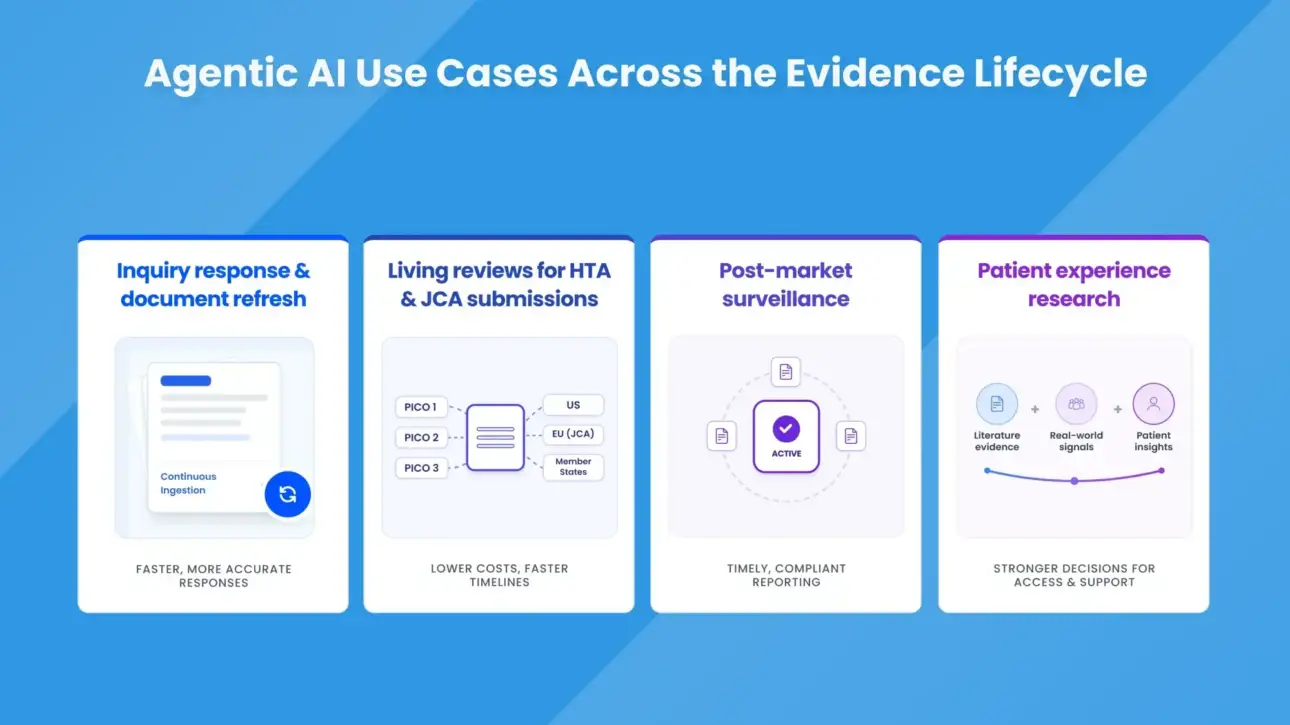

Drug discovery is evolving rapidly, but successful AI adoption requires more than powerful models. It demands validated evidence, robust governance, and realistic expectations. MadeAi empowers life sciences teams to accelerate drug discovery with AI-powered evidence synthesis and expert human validation, delivering faster scientific insights while maintaining transparency, traceability, and regulatory-grade quality. Download Deploying AI in…
Scaling Patient-Reported Outcomes In the world of clinical research and drug development, patients’ own voices matter more than ever. Patient-reported outcomes (PROs) capture how people actually feel, their symptoms, quality of life, side effects, and daily functioning. Yet turning these often messy, free-text or survey responses into clean, structured data that regulators can trust has…
HTA-Ready Evidence Dossiers HTA (Health Technology Assessment)-ready evidence dossiers represent a critical deliverable for HEOR teams seeking market access and reimbursement for new therapies. These documents compile clinical, economic, and real-world evidence to meet strict requirements from health technology assessment bodies such as NICE, CADTH, or HAS. HTA-ready evidence dossiers demand more data, tighter timelines,…
Why Evidence for Rare Disease Matters AI and real-world evidence (RWE) are reshaping the path from laboratory discovery to regulatory approval. Their convergence matters most for patients who can't afford to wait. For patients with rare diseases, waiting for treatment can mean years of uncertainty. In the United States, a rare disease is generally defined…
SLR vs. Meta-Analysis: An Overview You've just received a research question from your stakeholders. They want to understand the effectiveness of a new therapeutic intervention across the published literature. Naturally, your next thought is: should we conduct a systematic literature review (SLR) or a meta-analysis? In healthcare and life sciences, this question sits at the…
How do you prepare Clinical Evaluation Reports (CERs) without spending months reviewing clinical literature? In this case study, MadeAi partnered with a medical device manufacturer to conduct systematic literature reviews supporting Clinical Evaluation Reports (CERs) for three vascular devices. Using AI-assisted search, explainable screening, structured data extraction, and SME validation, the team generated submission-ready clinical…