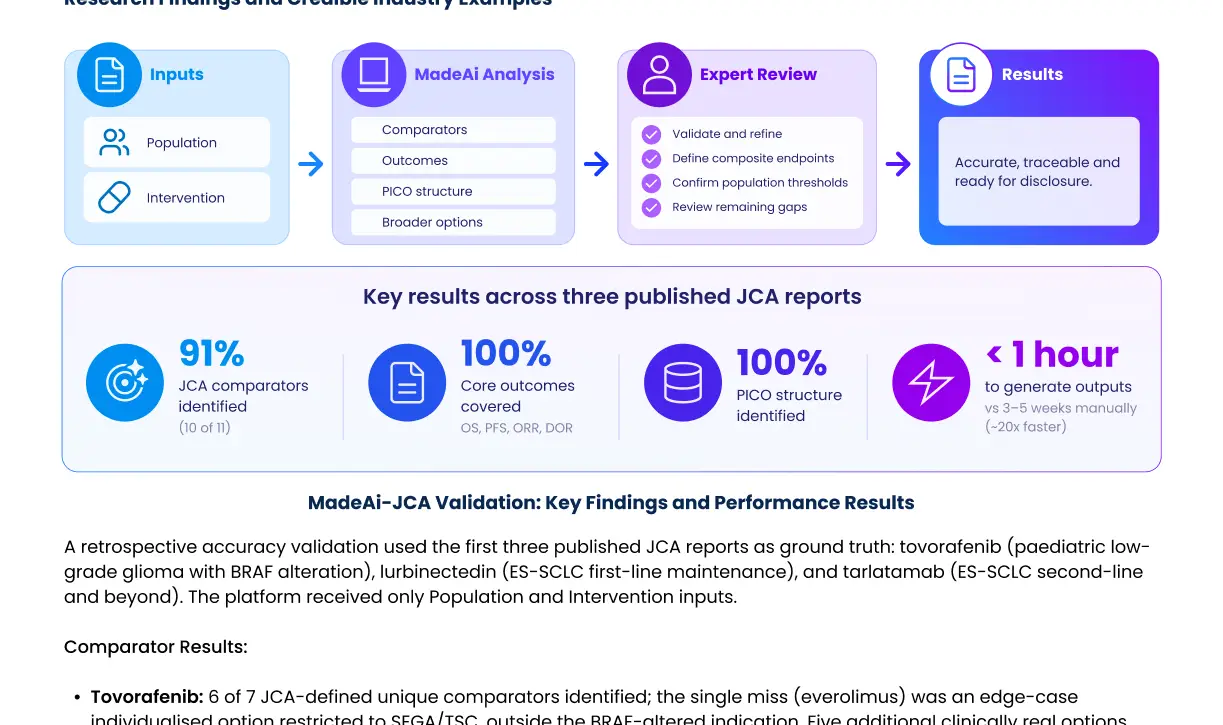
Preparing for the EU Joint Clinical Assessment (JCA) requires manufacturers to address multiple PICO requirements across 27 Member States within a 100-day submission window. Anticipating these requirements early is essential for identifying evidence gaps and planning comprehensive clinical evidence reviews. AI-assisted approaches can help anticipate relevant comparators, outcomes, and PICO structures while accelerating evidence planning.…
Read the Unreadable: AI-Native Evidence Synthesis from Forest Plots, Kaplan-Meier Curves, and Beyond
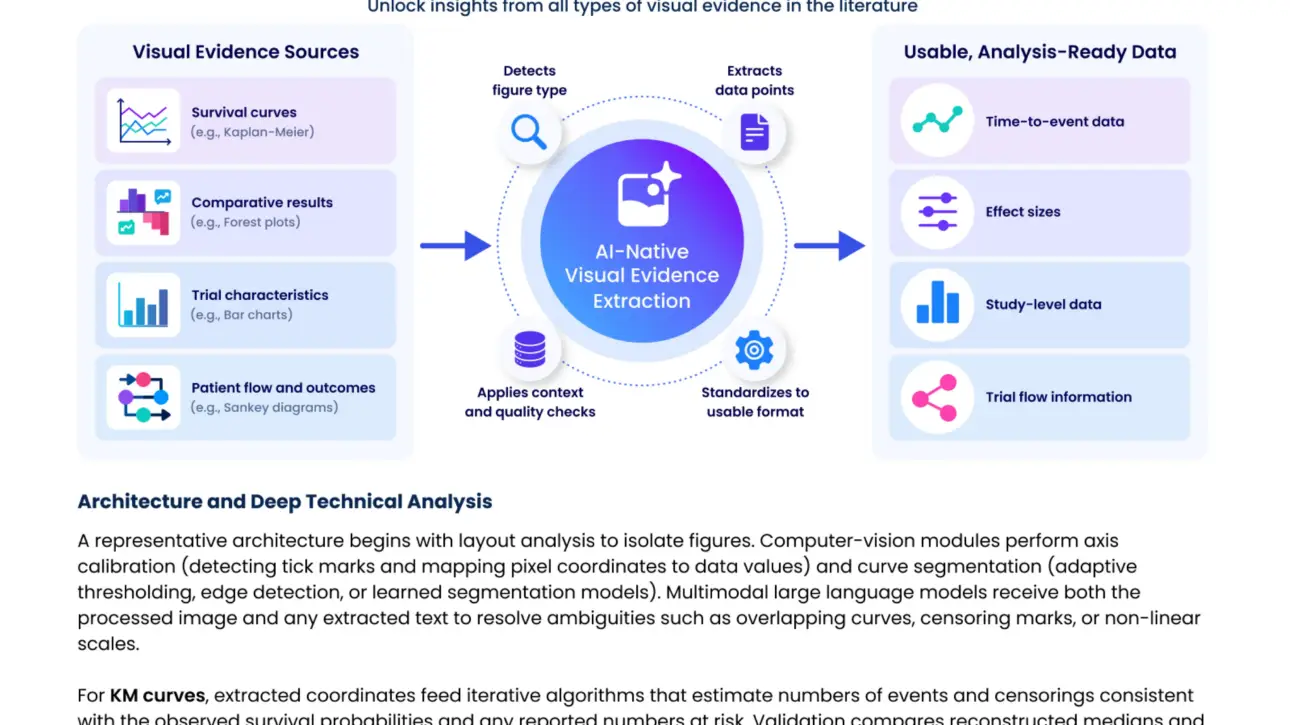
Evidence synthesis often relies on quantitative data embedded in Kaplan-Meier curves, forest plots, and other scientific figures. Extracting this information manually can be time-intensive, inconsistent, and difficult to scale. AI-native approaches combine multimodal AI and computer vision to extract graphical evidence and transform it into structured, analysis-ready data. Their value depends on rigorous validation, governance,…
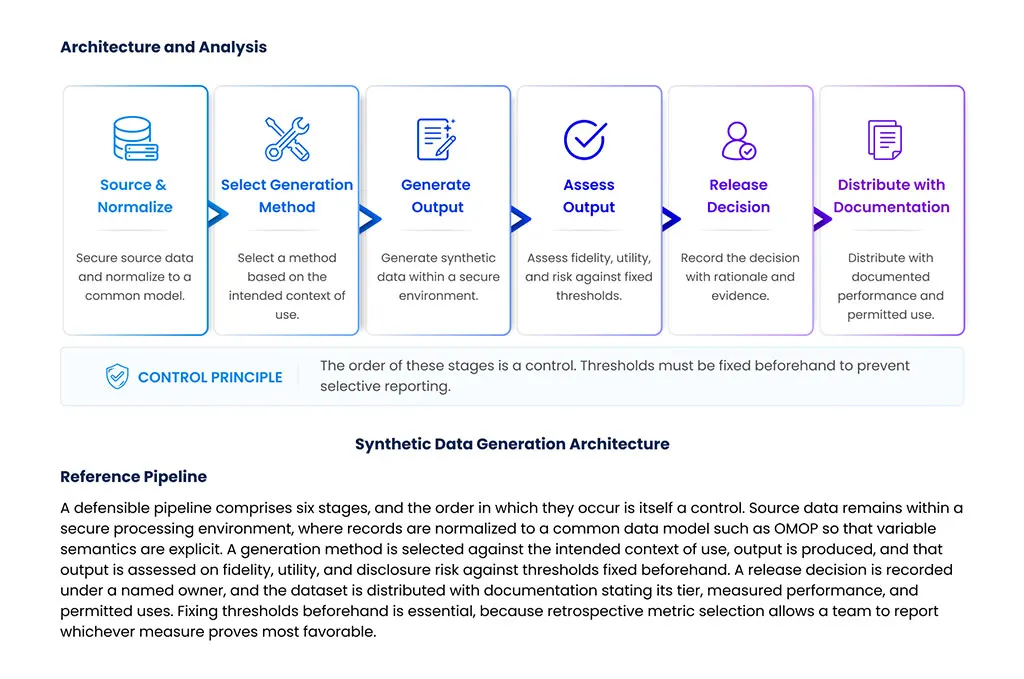
Evidence generation increasingly depends on real-world data, but access delays, sparse populations, limited comparators, and privacy constraints can leave critical evidence questions unanswered. Synthetic data offers a way to reduce these barriers by creating statistically representative datasets that support faster analysis, testing, collaboration, and bias assessment. Its value, however, depends on rigorous validation, clear governance,…
Drug discovery is evolving rapidly, but successful AI adoption requires more than powerful models. It demands validated evidence, robust governance, and realistic expectations. AI empowers life sciences teams to accelerate drug discovery through evidence synthesis and expert human validation, delivering faster scientific insights while maintaining transparency, traceability, and regulatory-grade quality. Download Deploying AI in Drug…
Drug repurposing has the potential to deliver new therapies faster and at a fraction of the cost of traditional drug development. However, identifying meaningful opportunities remains difficult, with valuable signals often hidden across thousands of research publications. AI-powered literature reviews, combined with expert human validation, accelerate evidence synthesis while maintaining transparency, accuracy, and regulatory-grade quality.…
AI adoption in evidence synthesis often stalls when traceability, governance, and real-world validation requirements enter the picture. Most evaluations still focus on isolated models instead of the full systems used in regulated workflows. AI embeds human validation, workflow orchestration, auditability, and governance throughout the evidence-synthesis process, helping organizations build defensible, production-ready workflows. Download Rethinking…