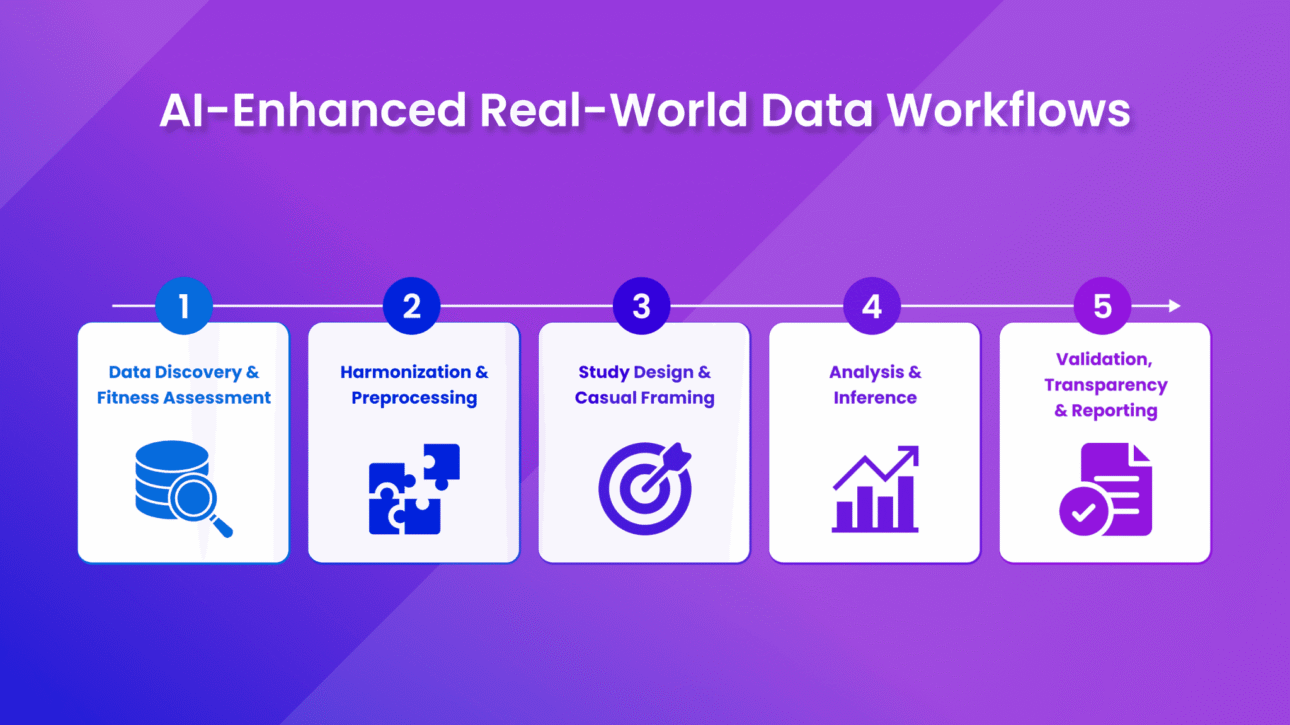
AI in Real-World Evidence: Why the Evidence Base Moved Outside the Trial AI in Real-World Evidence (RWE) has moved from pilot project to operating requirement because regulators, payers, and medical affairs teams now ask questions that randomized controlled trials (RCTs) were never designed to answer. How does a therapy perform in patients over 75 with…
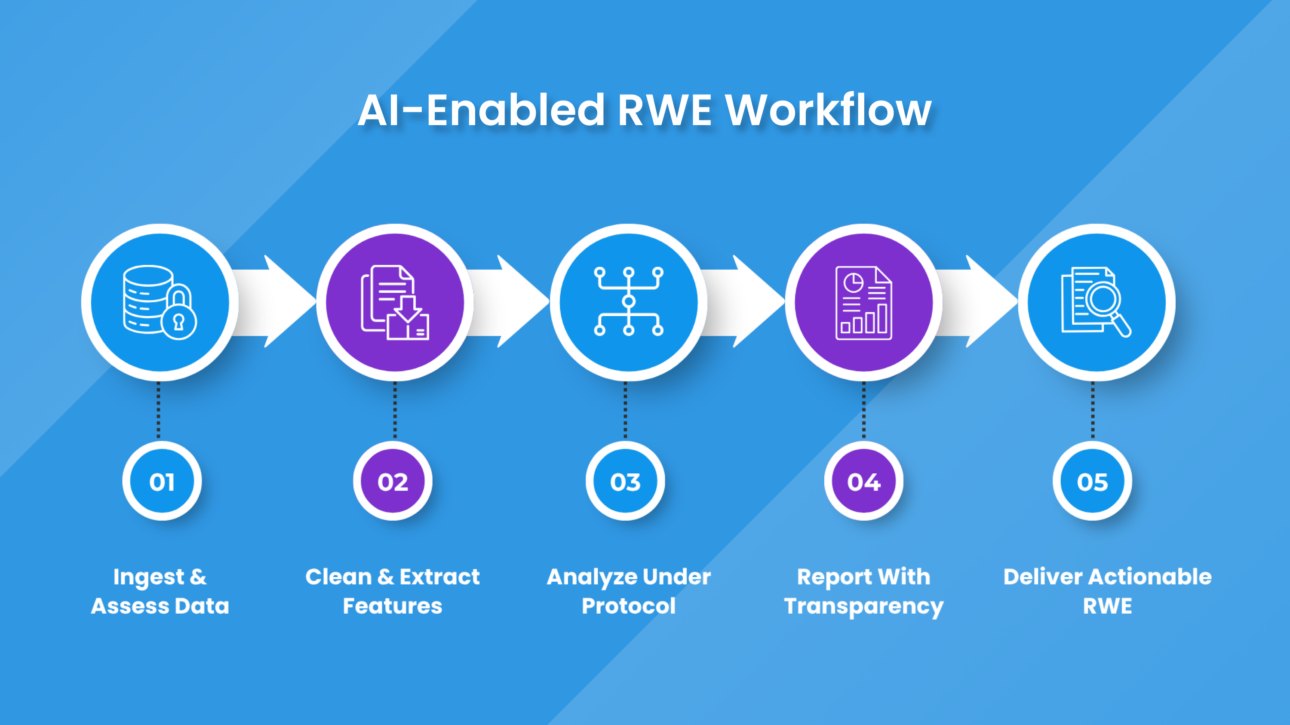
Overview Real-World Data (RWD) to Real-World Evidence (RWE) conversion stands at the center of modern life-sciences decision-making. Randomized controlled trials remain essential for establishing causality under controlled conditions, yet they leave gaps in understanding how treatments perform across diverse patients, care settings, and longer time horizons. RWD, drawn from electronic health records, claims, registries, wearables,…
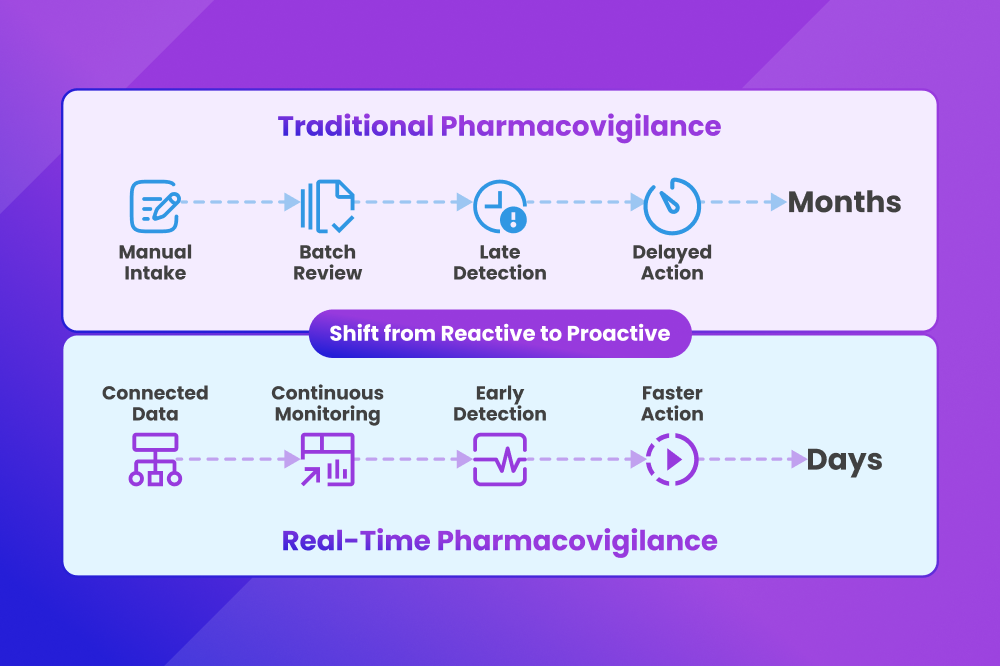
Imagine a world where drug safety isn’t just about responding to problems after they occur, but it’s about predicting and preventing them before patients are at risk. For decades, traditional pharmacovigilance (PV) has functioned like a fire alarm system: it activates only once the smoke appears. Adverse drug reactions (ADRs) are collected through Individual Case…
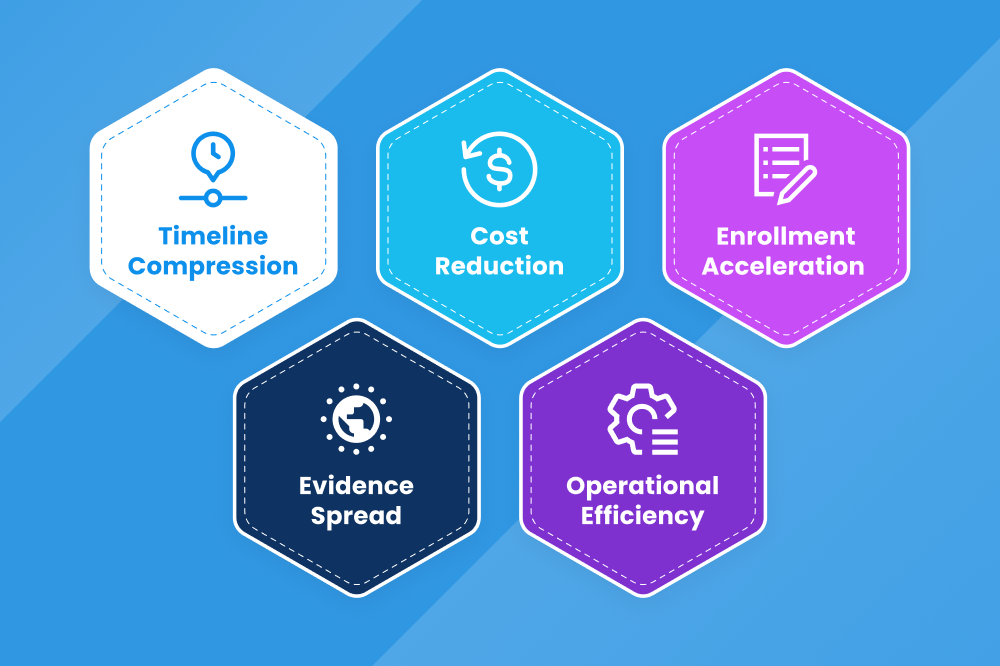
For years, the pharmaceutical industry has followed a familiar evidence cycle. Teams design a clinical trial, execute it, lock the database, analyze the results, and wait for another study to address remaining questions. They wait for post-market surveillance to reveal real-world outcomes and for regulators or payers to request additional data before reimbursement decisions. However,…
The pharmaceutical industry is currently at a pivotal moment in the AI landscape. After years of cautious AI experimentation limited to isolated labs and pilot programs, something fundamentally different is unfolding in 2026. The central question has shifted from “Does AI work?” to “How do we deploy it safely and at scale?” especially in organizations…
If Prediction #1 marked AI’s move into the core of life sciences operations, Prediction #2 defines how that AI will operate: not as passive copilots, but as agentic systems that reason, plan, and execute work autonomously. In CapeStart & MadeAi’s 2026 Predictions for AI in Life Sciences webinar, Angeline Dhas, Head of Product Management for…