Overview A conversational AI literature review changes where the hardest translation in evidence synthesis happens: the move from a clinical question to a database query a reviewer must defend. Evidence teams in life sciences rarely fail for lack of information. They fail because the volume of information has outgrown the methods used to search it.…
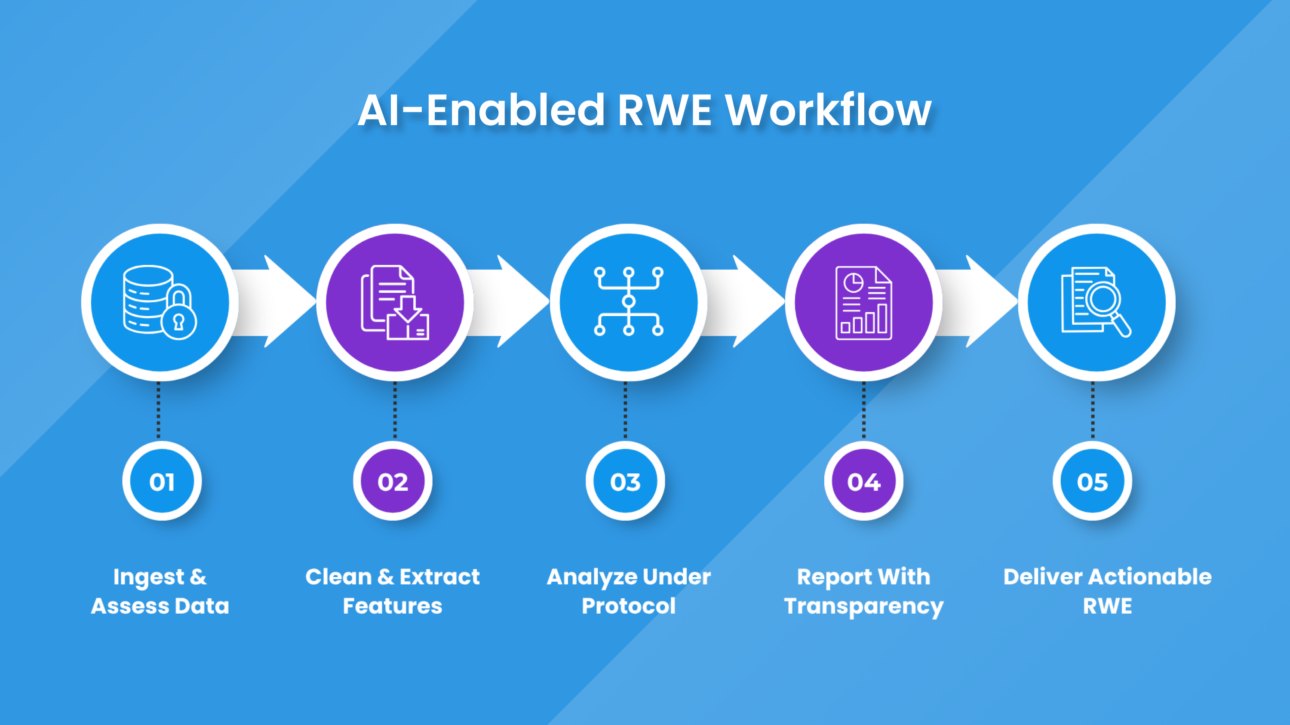
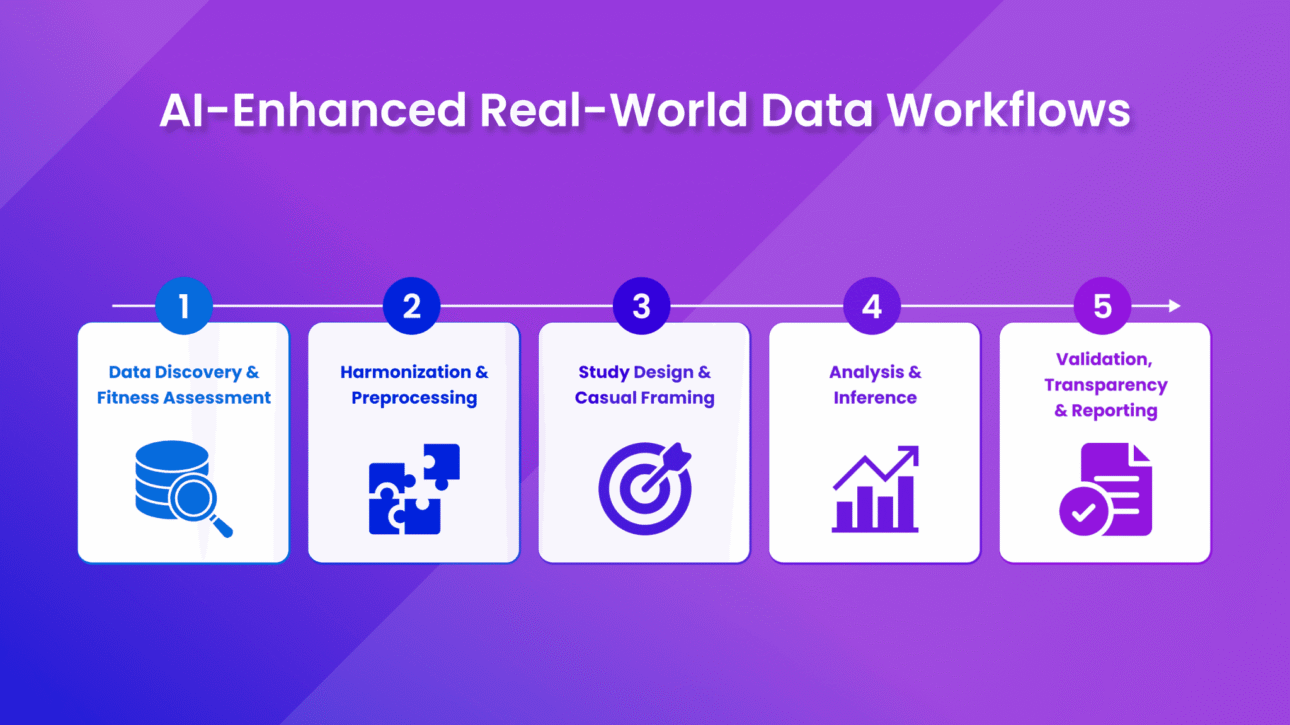
AI in Real-World Evidence: Why the Evidence Base Moved Outside the Trial AI in Real-World Evidence (RWE) has moved from pilot project to operating requirement because regulators, payers, and medical affairs teams now ask questions that randomized controlled trials (RCTs) were never designed to answer. How does a therapy perform in patients over 75 with…
Overview Real-World Data (RWD) to Real-World Evidence (RWE) conversion stands at the center of modern life-sciences decision-making. Randomized controlled trials remain essential for establishing causality under controlled conditions, yet they leave gaps in understanding how treatments perform across diverse patients, care settings, and longer time horizons. RWD, drawn from electronic health records, claims, registries, wearables,…
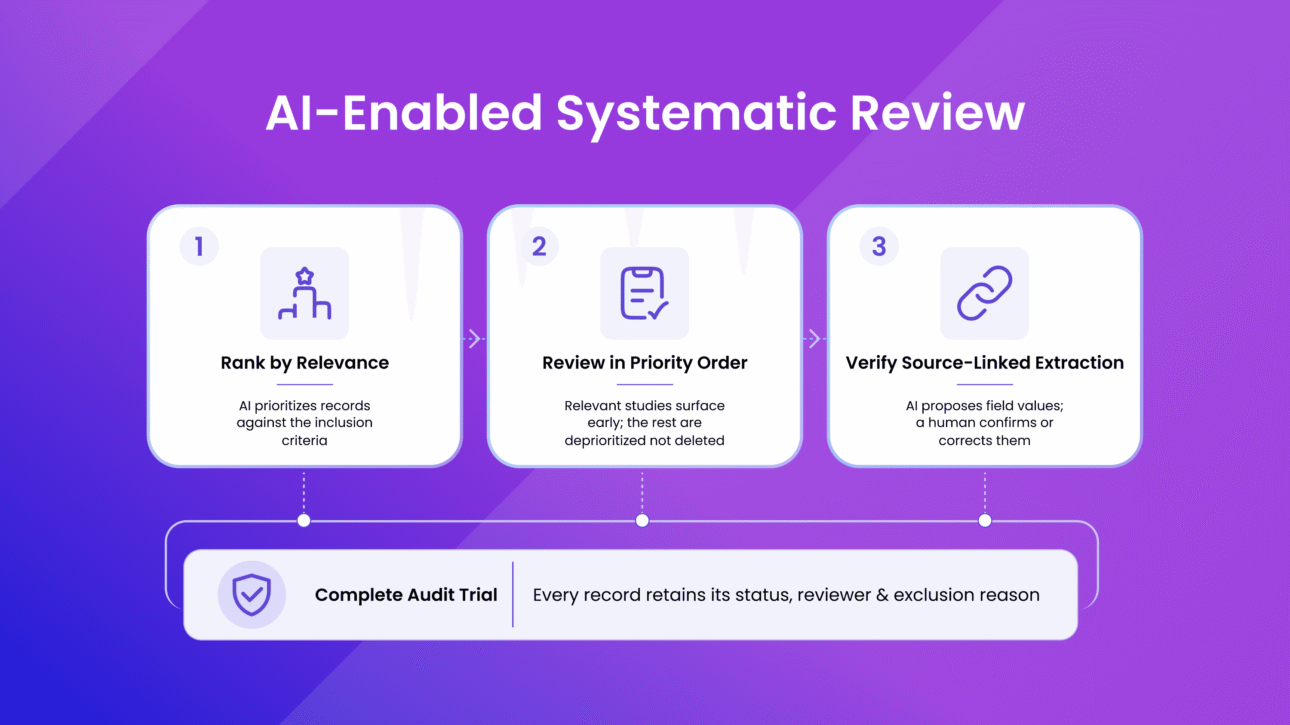
Overview AI vs. traditional systematic literature reviews (SLRs) is a question evidence teams now face daily, not just in academic debate. An SLR is a structured process for reviewing available research on a defined question. It includes identifying, screening, appraising, and synthesizing relevant studies. It follows a pre-registered protocol, such as the one described in…
Overview The future of Systematic Literature Reviews (SLRs) depends on thoughtful integration of technology rather than complete replacement of expert judgment. SLRs remain the foundation for reliable evidence synthesis across healthcare, technology assessment, and policy. The volume of published studies continues to expand, placing heavy demands on research teams that must deliver timely, transparent, and…
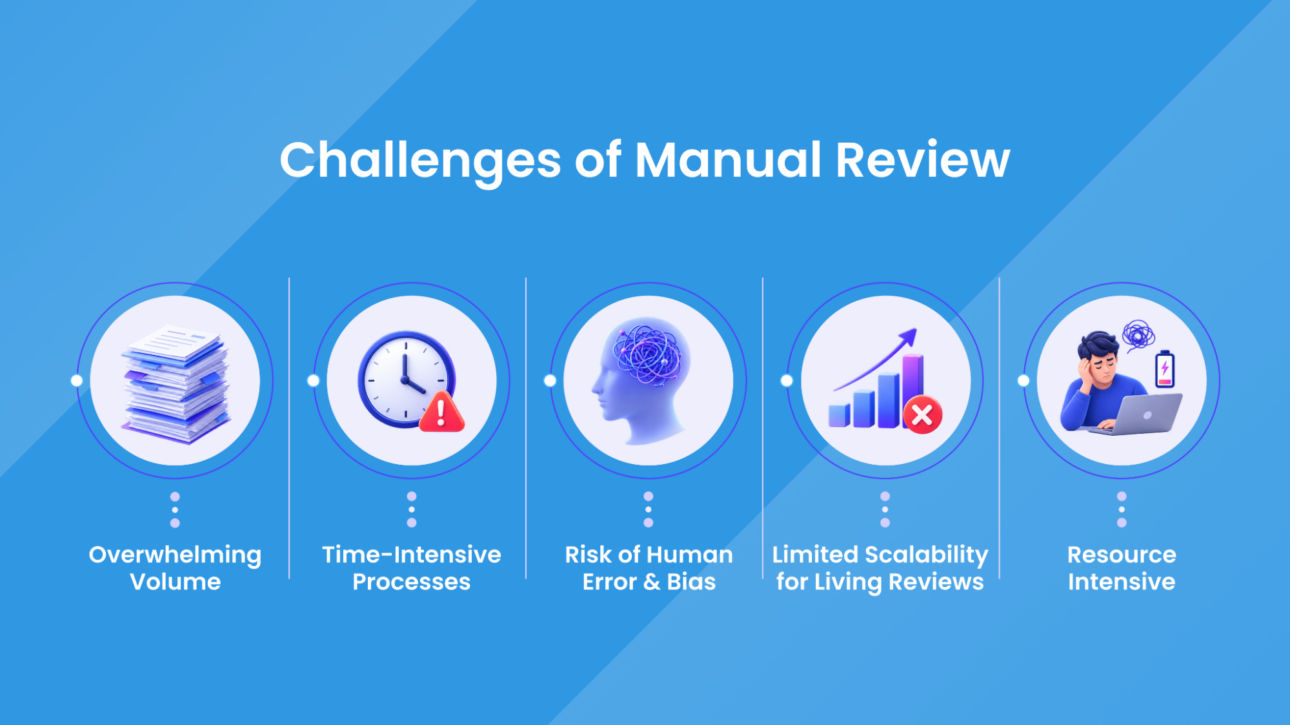
What Manual Literature Reviews Cost, and Where the Money Goes Manual systematic literature reviews remain the backbone of evidence-based decisions in healthcare, policy, and research. Teams follow strict protocols, search multiple databases, screen thousands of records, extract data by hand, and synthesize findings. The method delivers high-quality results. Yet the true price of this work…