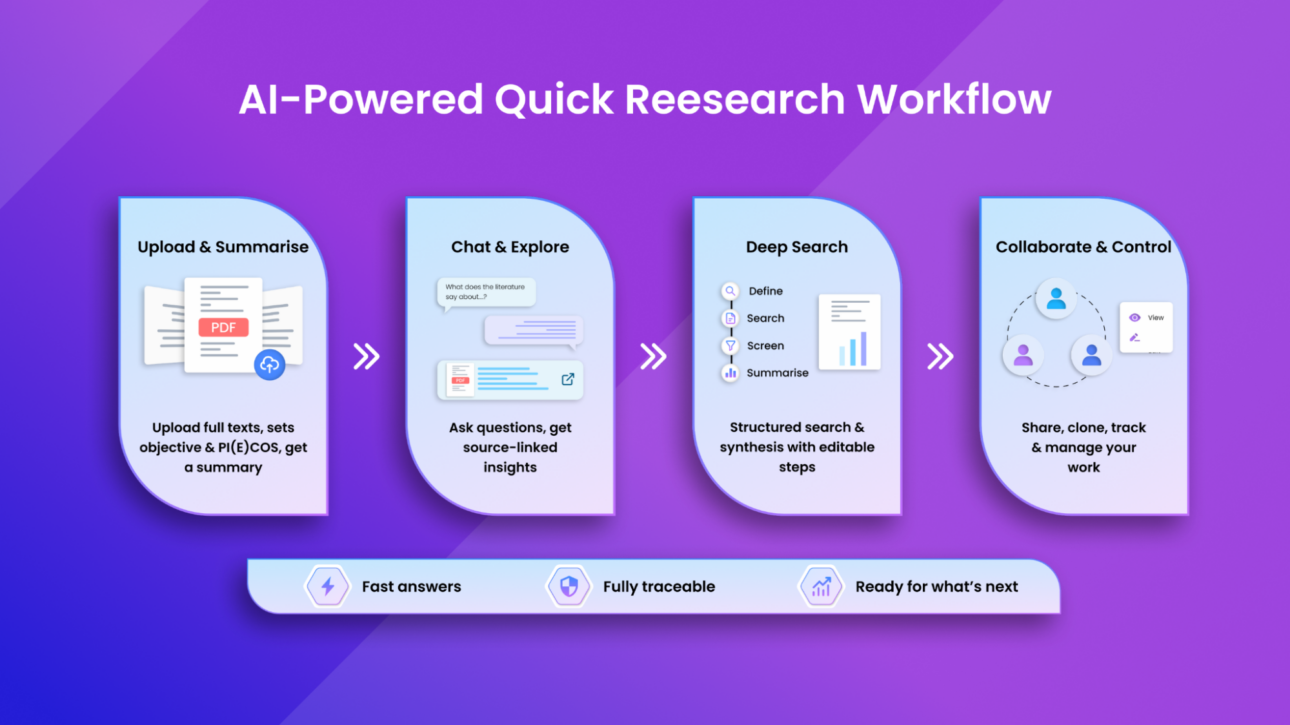
The Need for AI-Powered Quick Research AI-Powered Quick Research gives life sciences teams a faster way to explore and synthesize evidence while maintaining structure, traceability, and scientific rigor. Traditional systematic literature reviews (SLRs) remain the gold standard for high-stakes evidence in life sciences. However, they often take a long time, consume substantial resources, and struggle…
Data Extraction from Charts and Graphs: An Overview While extracting structured data from published text has become increasingly mature, extracting equivalent precision from visual data remains a significant challenge. Extracting the same precision from figures is not. In systematic literature reviews (SLRs), critical numbers often live only inside forest plots, Kaplan-Meier curves, Sankey diagrams, or…
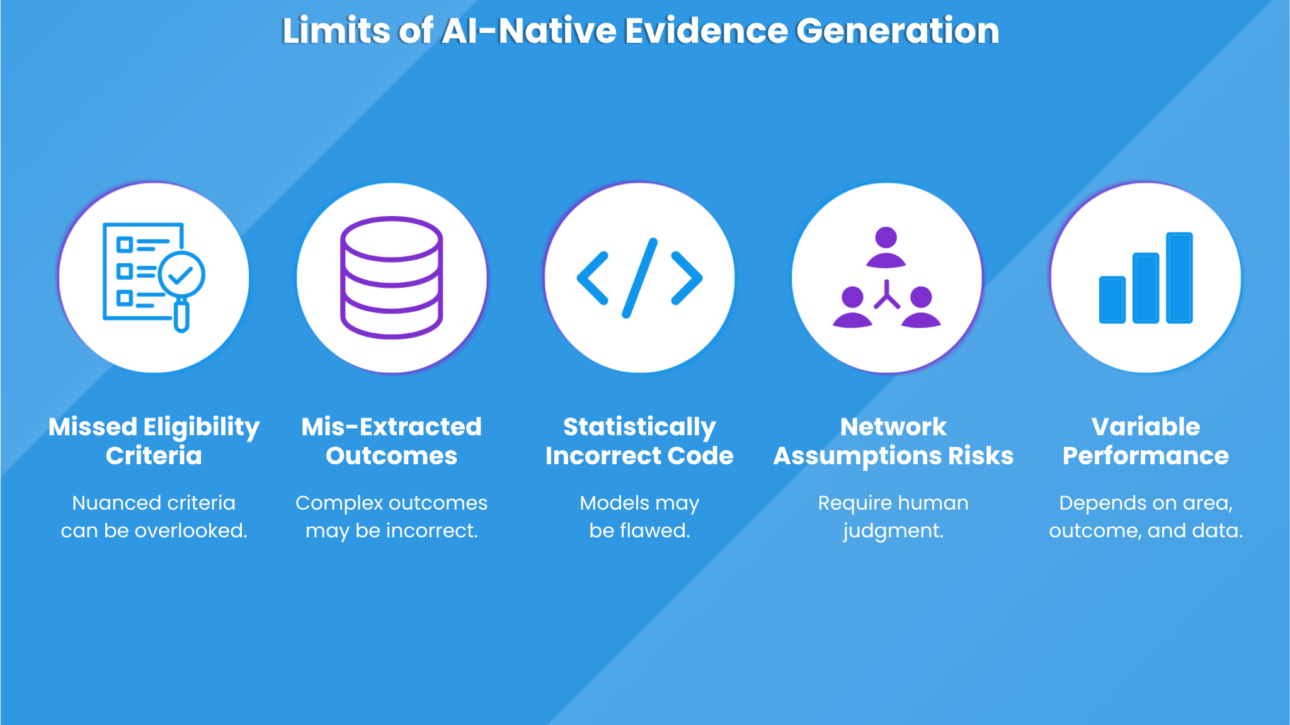
AI-Native Network Meta-Analysis: An Overview AI-Native Network Meta-Analysis is changing how life sciences teams generate and update comparative evidence. Network meta-analysis (NMA) lets decision-makers compare multiple treatments simultaneously, even when head-to-head trials are missing. Traditional NMA remains rigorous but slow, labor-intensive, and difficult to keep current. An AI-Native approach embeds machine learning and large language…
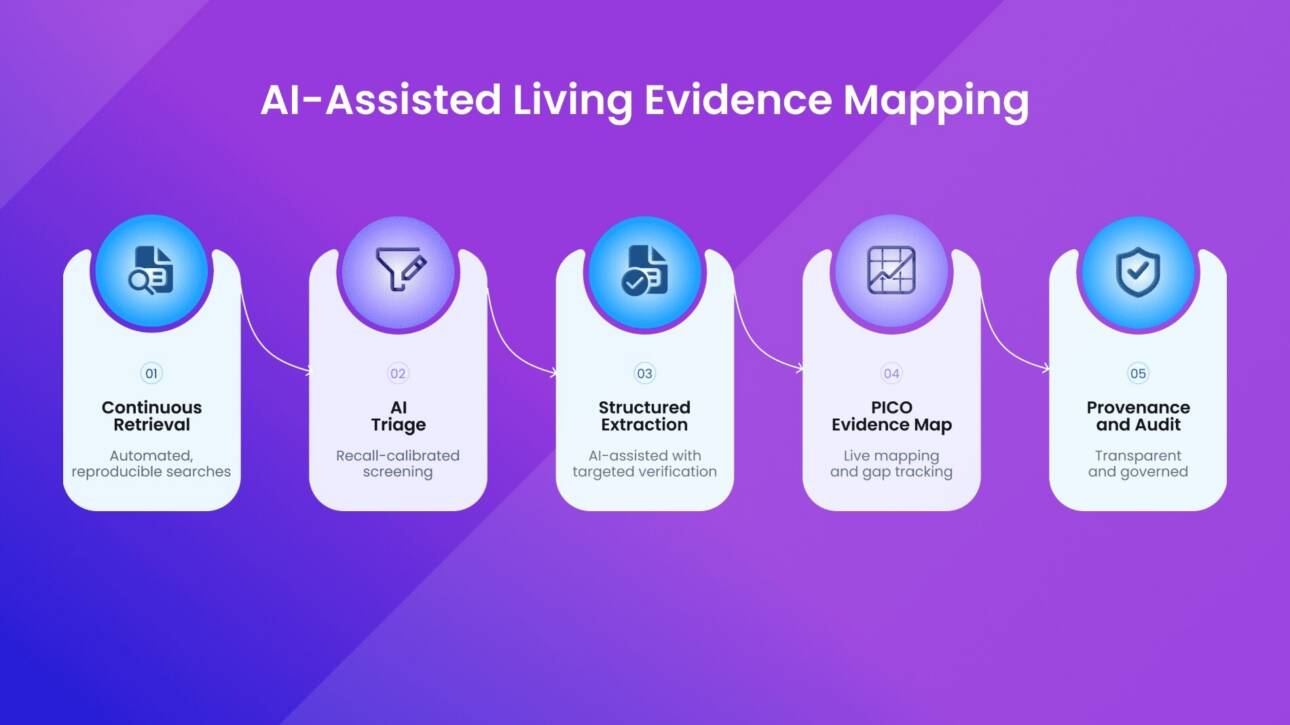
Living Literature Review and JCA: An Overview A living systematic literature review (SLR) is a critical asset for health technology developers facing the new operational reality under the European Union Health Technology Assessment Regulation. Joint Clinical Assessments (JCAs) demand comprehensive, transparent, and up-to-date clinical evidence packages that address multiple Population, Intervention, Comparator, and Outcome (PICO)…
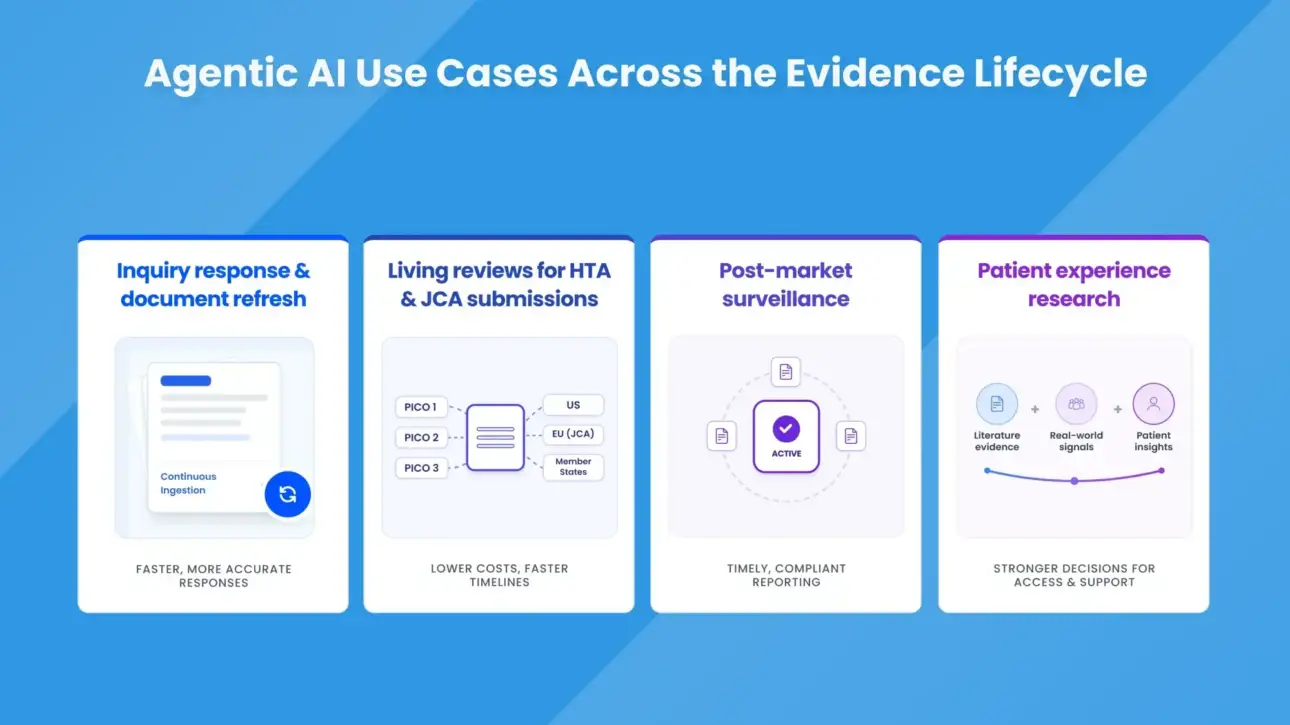
Medical Information and the Agentic Shift The future of medical information depends on how effectively life sciences organizations can synthesize the rapidly expanding body of scientific evidence. Systematic literature reviews (SLRs) remain the foundation of evidence-based decisions in HEOR, medical affairs, market access, and regulatory submissions. Traditional methods, however, struggle under growing publication volume, tighter…
AI-Powered RoB Assessment: An Overview Risk of bias (RoB) assessment sits at the core of trustworthy systematic reviews. It determines how much confidence decision-makers can place in the studies that inform guidelines, policy, and clinical practice. For years, this work has relied on trained human reviewers applying structured tools such as the Cochrane RoB 2…