

 Angeline Dhas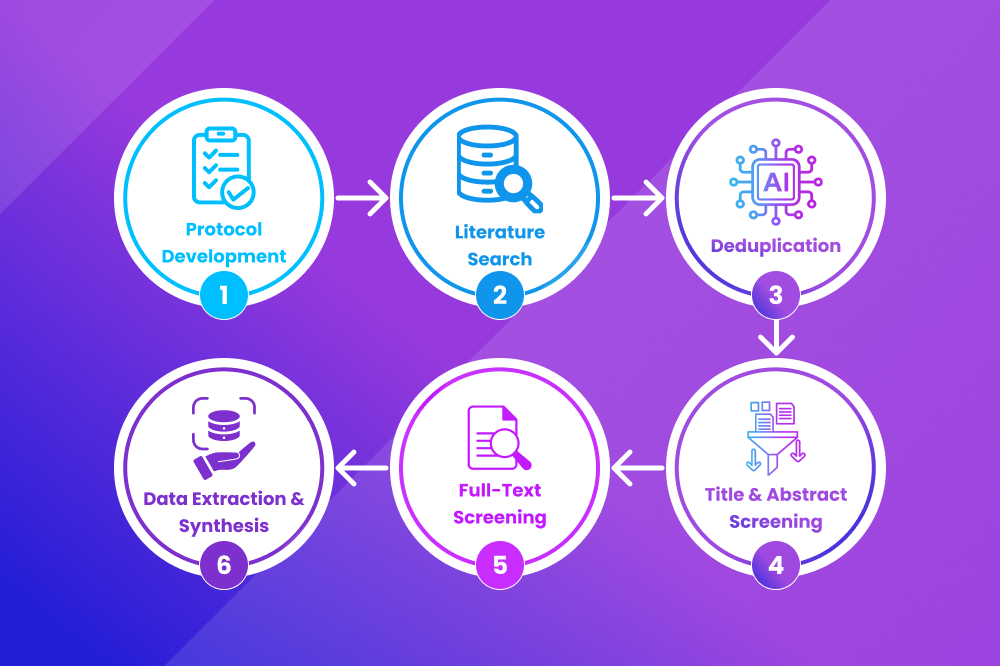
AI-Assisted Drug Repurposing
What if the next breakthrough treatment is already available today, hidden within existing drugs and waiting to be discovered?
This question drives the growing field of AI-assisted drug repurposing, a smart and cost-effective strategy that looks for new therapeutic uses for approved medications. Unlike traditional drug development, which can cost billions and take over a decade, repurposing builds on drugs with established safety profiles, manufacturing processes, and real-world data. However, finding these hidden opportunities has always been difficult. Promising signals often appear as secondary endpoints, subgroup analyses, or unexpected observations scattered across thousands of scientific papers.
At ISPOR 2026 in Philadelphia, MadeAi presented a compelling proof-of-concept study demonstrating how a structured literature review approach can systematically identify these hidden signals and accelerate hypothesis generation for drug repurposing while maintaining scientific rigor and regulatory standards.
Challenges in Drug Repurposing
Drug repurposing is not new. Success stories like sildenafil, originally for angina, repurposed for erectile dysfunction, and thalidomide (repurposed for multiple myeloma) show its potential. However, the path to discovery remains inefficient. Researchers face an explosion of biomedical literature, and PubMed alone adds hundreds of thousands of papers each year. Manual reviews are slow, expensive, and prone to missing subtle but important signals, especially when they are not the primary focus of a study.
Traditional systematic literature reviews (SLRs) for repurposing often take months. Teams struggle with high volumes of records, reviewer variability, and the cognitive load of connecting dots across diverse therapeutic areas. This delay can mean missed opportunities for patients and slower innovation for organizations under pressure to deliver value in competitive markets.
To address these limitations, the MadeAi team developed and tested an AI-assisted, structured literature review methodology. They chose iron supplementation as a proof-of-concept because of its well-established use in anemia and its potential for broader applications.
AI-Assisted Drug Repurposing Methodology: AI–Human Approach
Our hybrid methodology accelerates AI-assisted drug repurposing by combining AI’s ability to crunch massive amounts of data in hours with the critical insight of human experts. While the AI handles screening thousands of research papers to uncover hidden patterns. And, our specialists provide the final medical judgment to ensure every insight is accurate and reliable. This partnership cuts months of tedious manual work down to just 84 hours, allowing researchers to focus their energy on innovation rather than sorting.
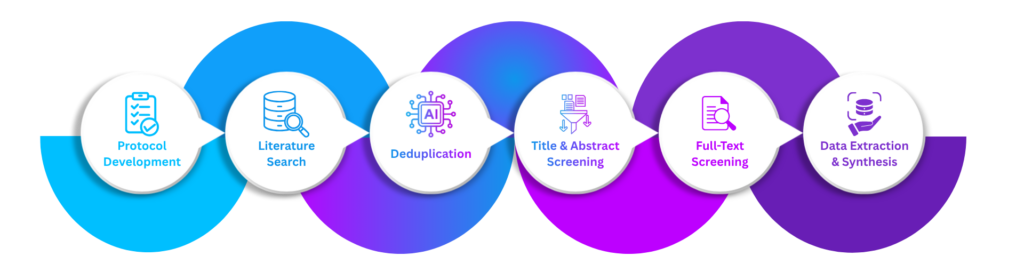
AI – Assisted Literature Review Workflow
Key steps include:
- Protocol Development: Clear eligibility criteria, PICOS framework, and search strategy were established and approved by human reviewers.
- Literature Search: PubMed was queried, yielding 2,140 records.
- Deduplication: AI tools efficiently removed duplicates (zero duplicates identified in this case).
- Title and Abstract Screening: AI-assisted screening with intelligent study selection, followed by human validation. Out of 2,140 records, 1,287 were excluded, leaving 853 for full-text review.
- Full-Text Screening: AI support helped prioritize relevant articles, resulting in 46 final studies (13 on anemia patients and 33 on non-anemia populations).
- Data Extraction and Synthesis: AI-assisted extraction of off-label benefits and risks, with all findings reviewed and interpreted by subject-matter experts.
One of the standout achievements was speed. The entire process from protocol creation to final qualitative synthesis was completed in just 84 hours. AI screening accuracy reached 85%, highlighting the effectiveness of the hybrid model where AI handles volume and pattern recognition while humans ensure medical judgment and interpretability.
Findings: Uncovering the Therapeutic Signals
By systematically analyzing the literature, we identified clear signals of improved quality of life and better clinical outcomes across diverse areas, ranging from cardiovascular health and chronic kidney disease to pregnancy and inflammatory bowel disease. These findings demonstrate that, with the right AI tools, we can uncover hidden therapeutic opportunities that traditional, manual reviews might easily miss.
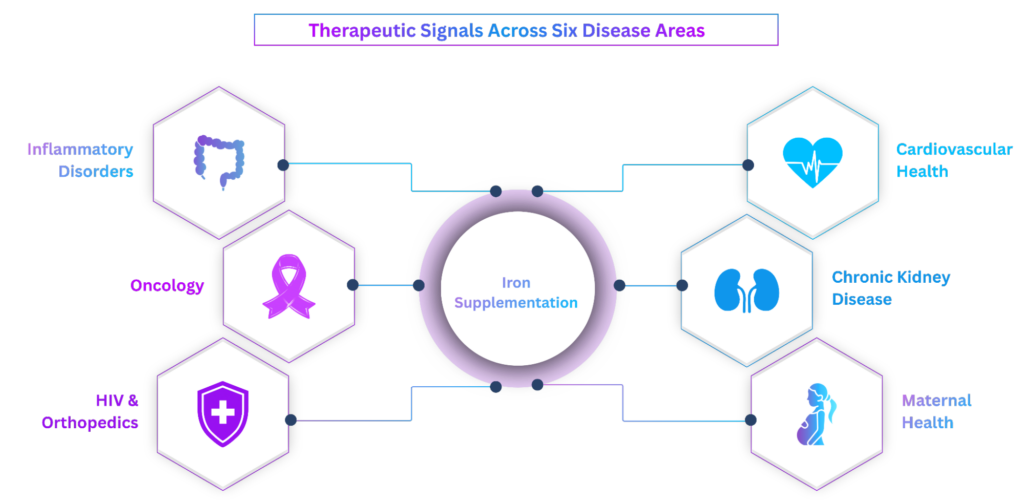
Safety Profile Consistent With Known Risks. No Widespread Novel Safety Concerns Identified.
In Anemia Patients (13 studies):
- Improvements in fertility, quality of life (QoL), and psychological outcomes.
- Enhanced postoperative recovery, mobility, muscle strength, and exercise capacity.
- Reduced hospital stay, infection risk, and fibromyalgia-related symptoms in certain contexts.
- Better treatment outcomes in gynecological surgeries and other procedures.
In Non-Anemia Populations (33 studies):
- Cardiovascular Disease (13 studies): Reduced hospitalization, improved cardiac function, exercise capacity, and ventricular performance. Lower risk of heart failure severity and all-cause mortality in specific settings.
- Chronic Kidney Disease (CKD, 7 studies): Better fatigue management, quality of life, and functional outcomes. Reduced cardiovascular events and hospitalizations.
- Pregnancy (5 studies): Reduced complications, improved postpartum recovery, and lower rates of depression.
- Inflammatory Bowel Disease (IBD, 4 studies): Anti-inflammatory effects, improved somatic growth, and reduced disease activity.
- Cancer and Other Areas: Reduced hospital stay, better functional status, and supportive benefits during treatment.
- Additional signals in HIV, orthopedics, and immunological disorders, including improved infection outcomes and survival metrics.
Ferric carboxymaltose emerged as a leading formulation, consistently showing functional and healthcare utilization benefits across populations. Importantly, reported risks were generally mild and aligned with known safety profiles, such as gastrointestinal discomfort or injection-site reactions, adding confidence to the repurposing signals.
Performance Table: AI-Assisted Literature Review Efficiency
| Stage | Traditional Estimate | AI-Assisted Result | Improvement Highlight |
|---|---|---|---|
| Records Screened | 2,140 | 2,140 | 85% AI screening accuracy |
| Final Studies Included | 46 | 46 | Human-validated |
| Total Time | 4–8 weeks | 84 hours | ~80% faster |
| Key Output | Manual synthesis | Structured signals | Transparent & reproducible |
AI-Assisted Drug Repurposing – Connecting Research to Results
For pharmaceutical companies, biotech firms, HEOR teams, and medical device developers, this AI-assisted drug repurposing approach offers tangible advantages. First, it significantly shortens the time needed to generate hypotheses. What once took months can now be accomplished in days, allowing faster go/no-go decisions on repurposing programs.
Second, it enhances comprehensiveness. AI helps surface subtle signals that busy human teams might overlook while maintaining full audit trails for regulatory scrutiny. This is especially valuable in evidence generation for label expansions, health technology assessments (HTA), and payer negotiations.
Third, it reduces team burden. Instead of spending countless hours on repetitive screening and extraction, experts can focus on higher-value activities: interpreting results, designing follow-up studies, and developing clinical strategies.
Clients working in cardiovascular, nephrology, women’s health, and chronic disease areas can particularly benefit. The case study on iron supplementation shows how repurposing signals can inform new indications, combination therapies, or supportive care strategies, which ultimately improve patient outcomes while controlling development costs.
Moreover, this methodology aligns with broader industry shifts toward responsible AI adoption in regulated environments. By combining AI efficiency with human oversight, organizations can achieve both speed and trustworthiness, a critical balance as regulators increasingly examine AI use in evidence synthesis.
Broader Implications and Future Directions
This proof-of-concept is more than a single-drug study. It validates a scalable framework that can be applied to other compounds across therapeutic areas. As literature volumes continue to grow, AI-assisted tools will become essential for staying competitive in evidence generation.
Looking ahead, integrating multimodal data (real-world evidence, clinical trial results, and social signals) with AI-driven literature insights could further strengthen repurposing pipelines. Future evaluations using emerging AI-guidance frameworks will standardize how such tools are assessed for accuracy, factuality, and operational readiness.
For organizations, the message is clear: embracing structured AI support in literature review is no longer optional, but it is becoming a strategic capability for innovation and efficiency.
Author’s Note: This article was supported by AI-based research and writing, with Claude 4.5 assisting in the creation of text and images.