

 Meghan Oates-Zalesky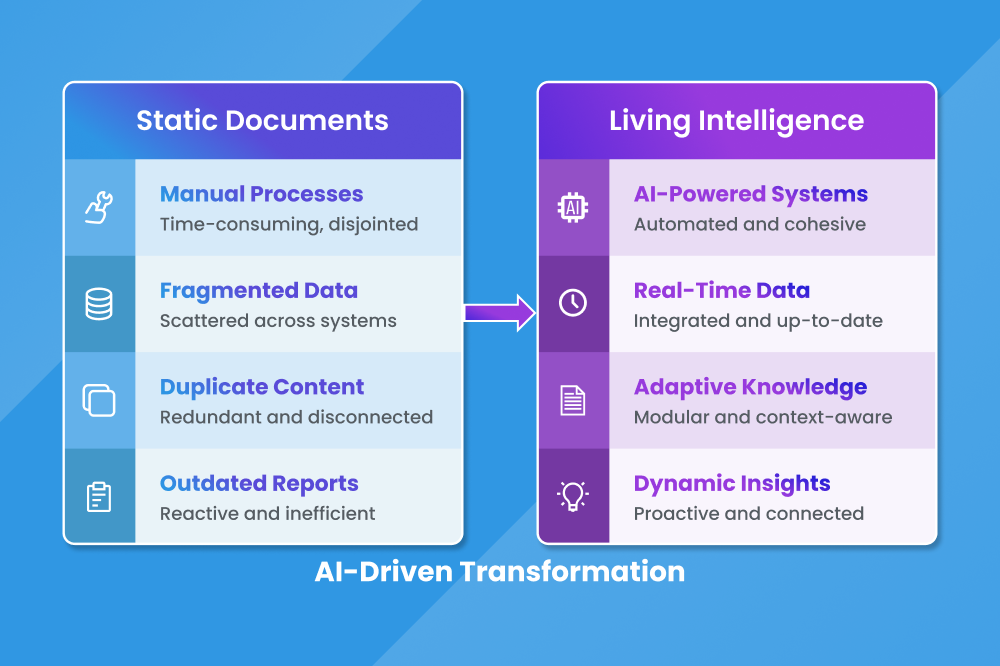
Introduction: The Next Wave of Pharma Innovation
In the life sciences, regulatory content has always played a critical role, yet it has rarely been treated as a strategic asset. Documents such as clinical summaries, regulatory submissions, safety reports, and evidence dossiers are essential for compliance, but they are often viewed as static outputs rather than evolving assets. However, this perspective is beginning to shift. As we move into 2026, organizations are rethinking regulatory content not merely as a requirement, but as a source of competitive advantage. This transformation is being driven by AI agents that can orchestrate, generate, validate, and continuously refine regulatory workflows. Instead of asking how quickly submissions can be completed, leading teams are beginning to ask a more strategic question: how can regulatory content itself create an edge?The Problem: Static Content in a Dynamic World
Historically, regulatory workflows have been heavily manual and document-centric. Content creation has been fragmented across teams and systems, making it difficult to maintain consistency or reuse information efficiently. Updates are often reactive, triggered by new data or regulatory changes, and require significant rework. As a result, timelines extend, duplication increases, and valuable insights remain buried within disconnected documents. In a world where data is continuously evolving, this static approach no longer keeps pace with the demands of modern drug development.The Shift: From Documents to Living Intelligence
AI agents are fundamentally changing how regulatory content is created and managed. Rather than treating documents as final outputs, these systems transform them into dynamic, continuously evolving knowledge layers. Content becomes structured, modular, and context-aware, enabling it to adapt as new data emerges.This shift allows regulatory information to move beyond isolated documents and become part of a connected intelligence system that supports ongoing decision-making.
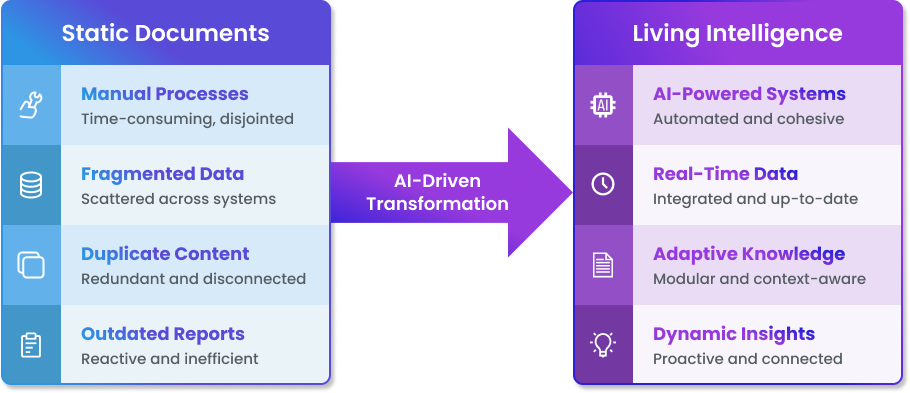 The Shift: From Documents to Living Intelligence
How AI Agents Turn Regulatory Content into a Competitive Asset
AI agents introduce a new level of orchestration into regulatory workflows. Instead of generating content in isolation, they connect multiple data sources, align outputs with regulatory formats, and ensure consistency across documents. This coordination enables teams to move faster while maintaining accuracy and structure.1. Speed to Market Becomes a Differentiator
Agents compress submission timelines from months to weeks by auto-generating modules, cross-checking against evolving regulations, and flagging gaps in real time. Companies that master this will launch safer products faster, capturing market share ahead of competitors still stuck in manual cycles.2. Safety Intelligence Fuels Innovation
Instead of filing reports and forgetting them, agents continuously mine regulatory data alongside real-world evidence. They surface causal insights, predict drug-drug interactions, and even recommend label enhancements that strengthen a product’s value proposition. Proactive risk management becomes a selling point to payers, physicians, and patients.3. Cost Savings Re-invested in R&D
Industry forecasts show the AI in the regulatory affairs market growing from roughly USD 1.9 billion in 2026 to USD 8.86 billion by 2035 at a CAGR of 18.65%. Early adopters are already projecting 40-60% efficiency gains in PV operations—freeing budgets for next-generation therapies rather than administrative overhead. Reactive vs. Proactive Pharmacovigilance – Quantified Impact| Aspect | Reactive (Pre-2026) | Proactive with AI Agents (2026) | Business Impact |
|---|---|---|---|
| Signal Detection | Manual review, months of delay | Real-time, predictive across global datasets | Earlier interventions reduced liability |
| Submission Preparation | Weeks of manual compilation | Automated orchestration, days | Faster market entry |
| Label Updates | Sequential, error-prone | Dynamic, multi-region propagation | Consistent compliance, brand trust |
| Resource Allocation | 70%+ on routine tasks | 30% on strategy & oversight | Talent redirected to innovation |
| Competitive Edge | Compliance checkbox | Data-driven safety leadership | Market differentiation & revenue growth |
Why This Becomes a Competitive Advantage
As regulatory content becomes more intelligent and connected, its role within organizations expands significantly. Faster submission cycles allow companies to reach markets sooner, while improved consistency enhances regulatory confidence. The ability to reuse content across regions reduces duplication and operational burden. More importantly, regulatory content begins to function as a knowledge asset rather than a compliance artifact. Insights that were once buried within documents become accessible, enabling better strategic decisions across clinical, regulatory, and commercial teams.Real-World Impact Across the Lifecycle
This shift is already influencing multiple areas of the life sciences value chain. In clinical development, teams can respond more quickly to protocol changes and reporting requirements. In HEOR and market access, structured evidence can be reused to support HTA submissions. Pharmacovigilance benefits from continuous safety monitoring and reporting, while regulatory affairs teams gain efficiency in dossier creation and lifecycle management.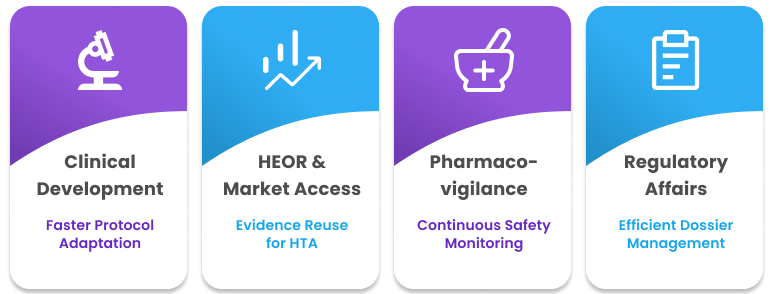 Real-World Impact Across the Lifecycle