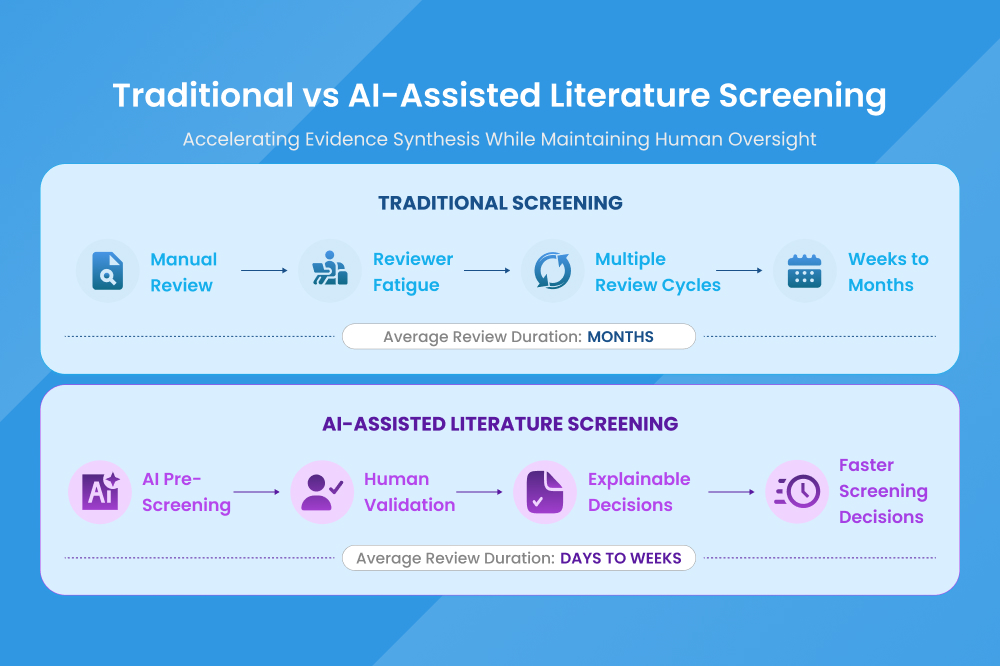
What is AI-assisted literature screening for Class II medical devices? AI Literature Screening for Medical Devices is the application of artificial intelligence to identify, review, classify, and prioritize scientific literature relevant to a medical device. This reduces the manual effort required for evidence generation and regulatory review workflows. For instance, AI analyzes titles, abstracts, and…
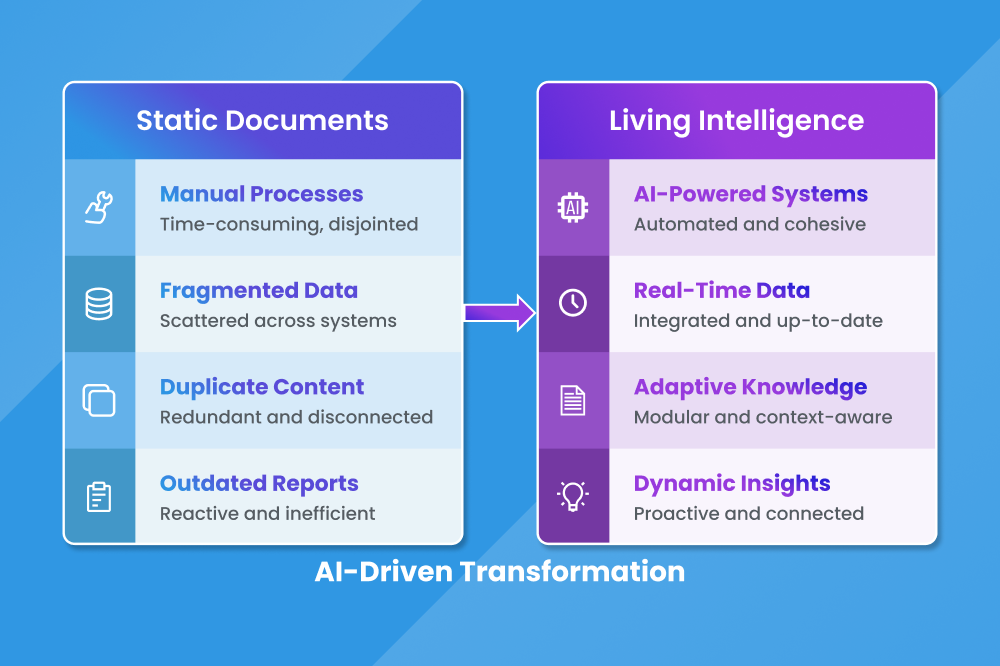
Introduction: The Next Wave of Pharma Innovation In the life sciences, regulatory content has always played a critical role, yet it has rarely been treated as a strategic asset. Documents such as clinical summaries, regulatory submissions, safety reports, and evidence dossiers are essential for compliance, but they are often viewed as static outputs rather than…
For the last several years, artificial intelligence in life sciences has largely lived in innovation labs and pilot programs—valuable but often disconnected from the workflows that actually drive regulatory approvals, market access, and clinical decision-making. In 2026, that changes. Our first prediction from MadeAi & CapeStart’s 2026 outlook, developed with insights from Angeline Dhas, Head…
In today’s fast-paced life sciences environment, literature reviews are critical—but they’re also time-consuming, labor-intensive, and increasingly expected to support regulatory, HEOR, and market access submissions while maintaining full transparency and traceability. While traditional platforms offer useful automation features, most are either rules-based classifiers or structured workflow tools, limiting their adaptability and explainability. That’s where MadeAi™ stands…
The rise of generative AI (GenAI) is transforming how life sciences organizations approach evidence synthesis, regulatory submissions, and market access activities. As literature review workflows become more complex—and timelines more compressed—life science professionals are increasingly turning to GenAI-enabled platforms to streamline systematic literature reviews (SLRs), reduce manual burden, and scale evidence synthesis. However, evaluating…
As the demands for faster, more accurate, and scalable literature reviews rise in life sciences, AI is no longer just a future promise—it’s a proven performance driver. Systematic literature review (SLR) teams, especially in HEOR and medical affairs, are adopting GenAI platforms not just for experimentation but to solve long-standing bottlenecks in screening, extraction, and…