
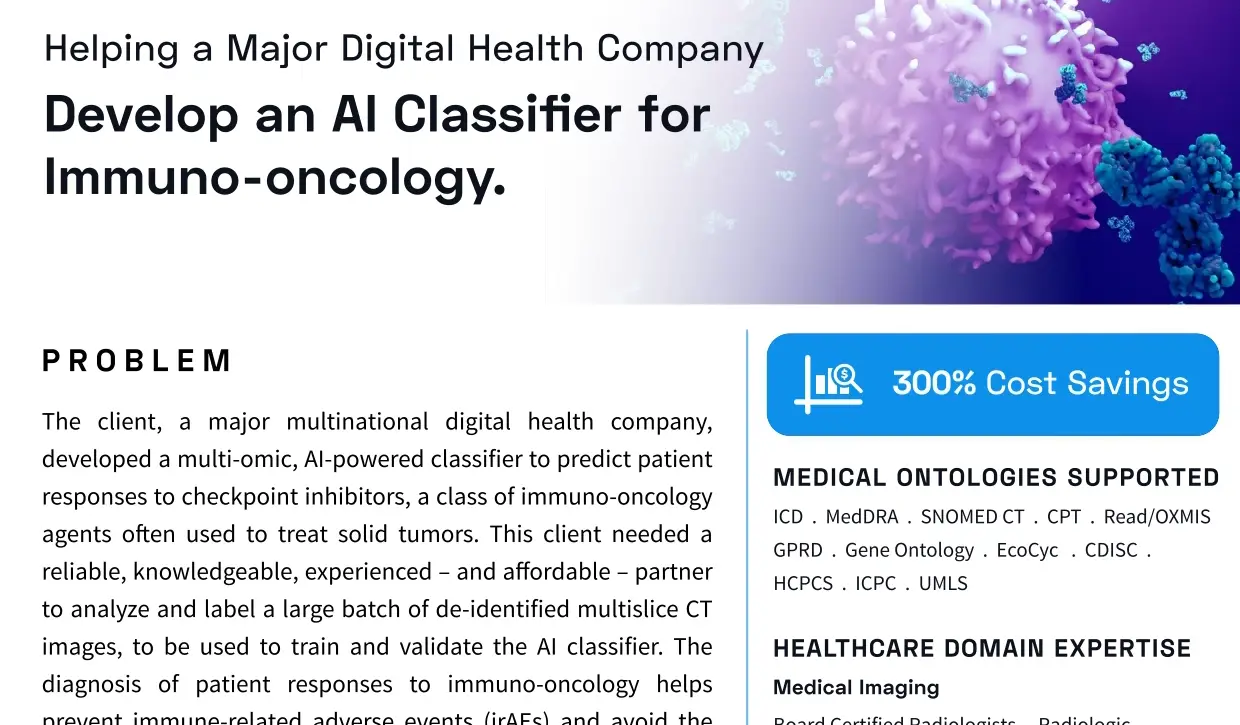
CapeStart helped a major multinational digital health company develop a multi-omic, AI-powered classifier to predict patient responses to checkpoint inhibitors. Checkpoint inhibitors are a class of immuno-oncology agents often used to treat solid tumors. The client needed a reliable, knowledgeable, experienced and affordable partner to analyze and label a large batch of de-identified multislice CT…
Artificial intelligence (AI) has significantly impacted the pharmaceutical business in several ways, from drug discovery and formulation to clinical trials and monitoring for adverse drug reactions. But AI can also help improve pharma manufacturing, distribution, and supply chain management by improving efficiency, safety, quality, and other processes. Here’s how AI can be used to improve…
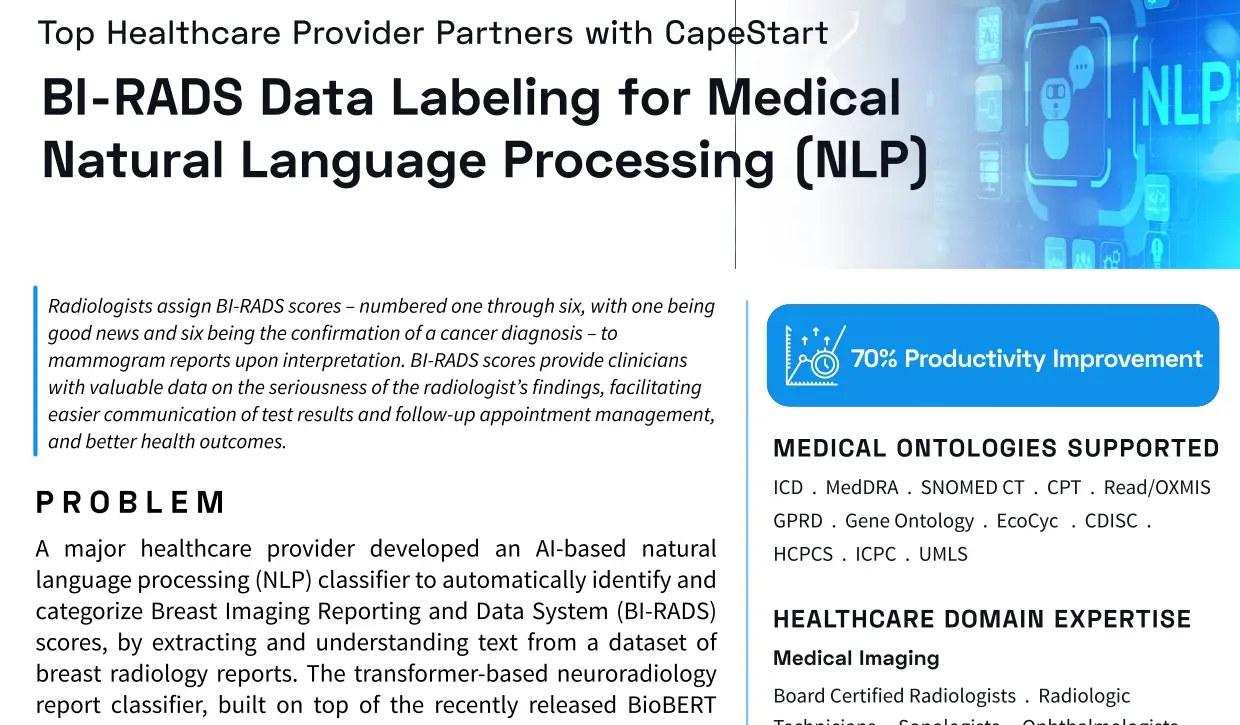
A major healthcare provider needed an experienced, innovative partner to help the development of an AI-based natural language processing (NLP) classifier. The client’s goal was to use the classifier to automatically identify and categorize Breast Imaging Reporting and Data System (BI-RADS) scores, by extracting and understanding text from a dataset of breast radiology reports. However,…
At the ISPOR 2024 Conference in Atlanta, attending health economics and outcomes research (HEOR) professionals lamented the drudgery of systematic literature reviews (SLRs) as they envisioned the potential for generative artificial intelligence (GenAI) to fix it. With a single SLR estimated to take anywhere from six to 16 months to complete and cost an average…
Healthcare providers are under constant pressure to provide high-quality care and improve patient experiences, while at the same time reducing operational costs. Luckily, healthcare organizations now have more information at their disposal than ever before. They’re sitting on an ever-increasing trove of data generated from diagnostic data, medical claims information, electronic medical records, medical Internet…