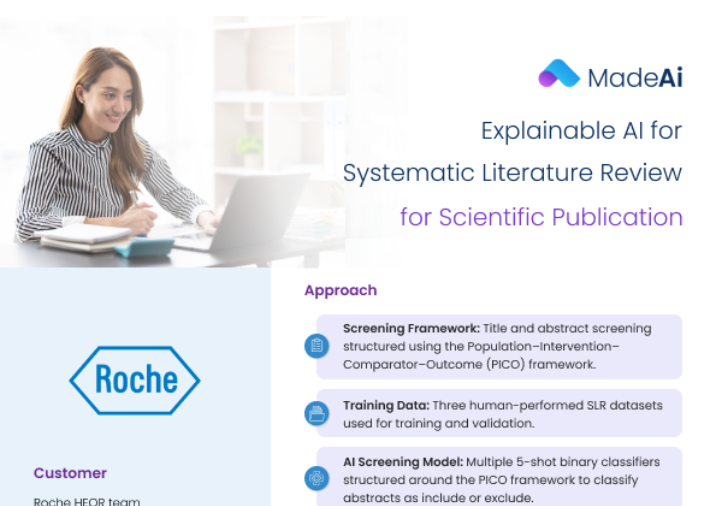
How do you screen thousands of abstracts with transparency and reproducibility using minimal training data? In this case study, MadeAi partnered with the Roche HEOR team to design and validate an explainable AI pipeline for title and abstract screening in a systematic literature review. Using a structured PICO-based framework, the team screened over 3,300 abstracts…
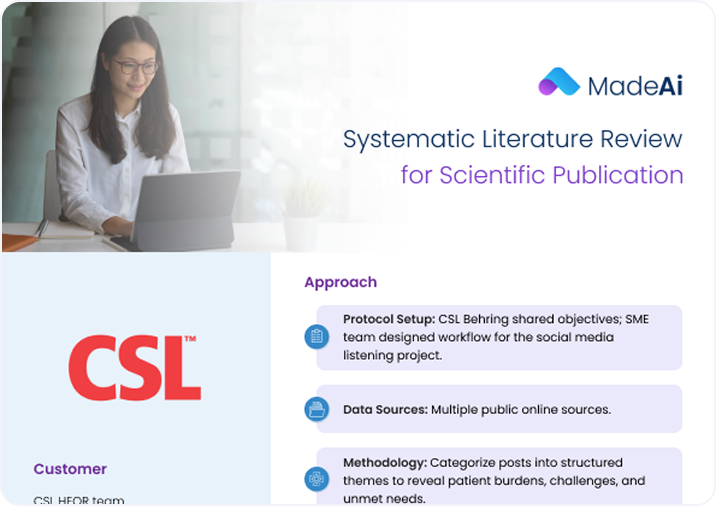
How do you turn unstructured social media conversations into publication-ready evidence in just 4 weeks? In this case study, MadeAi partnered with the CSL HEOR team to identify and curate hereditary angioedema-related conversations from public online sources, with insights supporting a Value in Health Journal article. Using a structured social media listening approach, the team analyzed 3,069 records to…
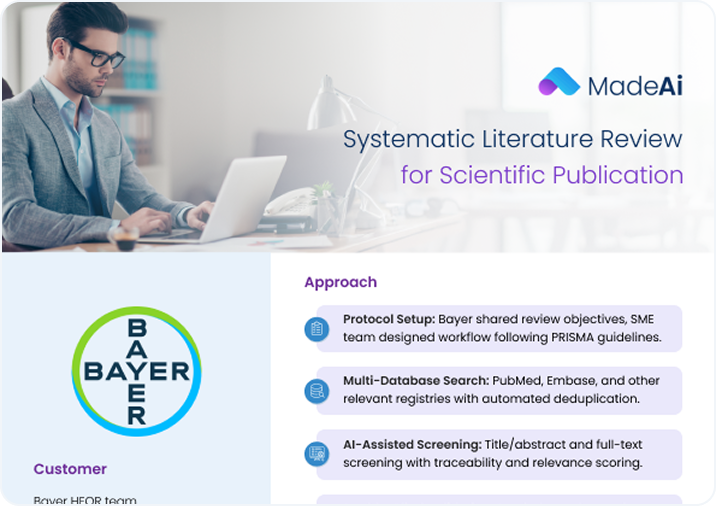
How do you review 4,552 studies in 9 weeks while maintaining PRISMA compliance and scientific rigor? In this case study, MadeAi partnered with Bayer’s HEOR team to conduct a systematic literature review on real-world treatment patterns in mCRPC, with findings published in European Urology Focus. Using an AI-aided, double-blinded review framework, the team achieved…
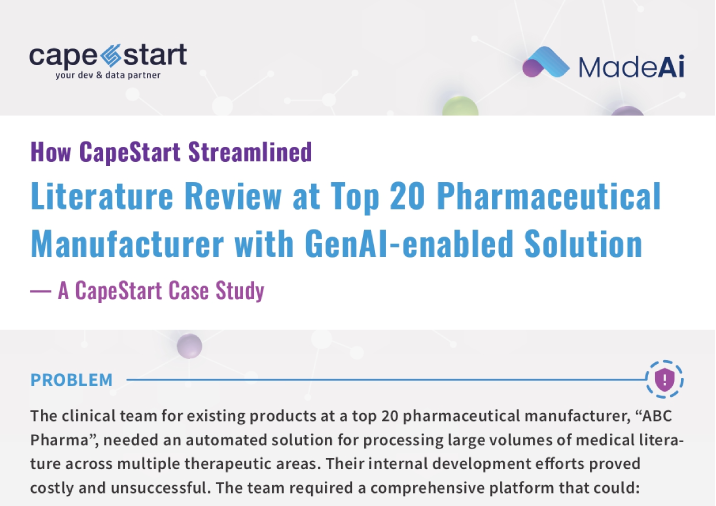
The clinical team for existing products at “ABC Pharma,” a top 20 pharmaceutical manufacturer, needed an automated solution for processing large volumes of medical literature across multiple therapeutic areas. Their internal development efforts had proved costly and unsuccessful.
Requiring a comprehensive platform that could handle diverse literature types, support Health Authority inquiries, process content across ten…
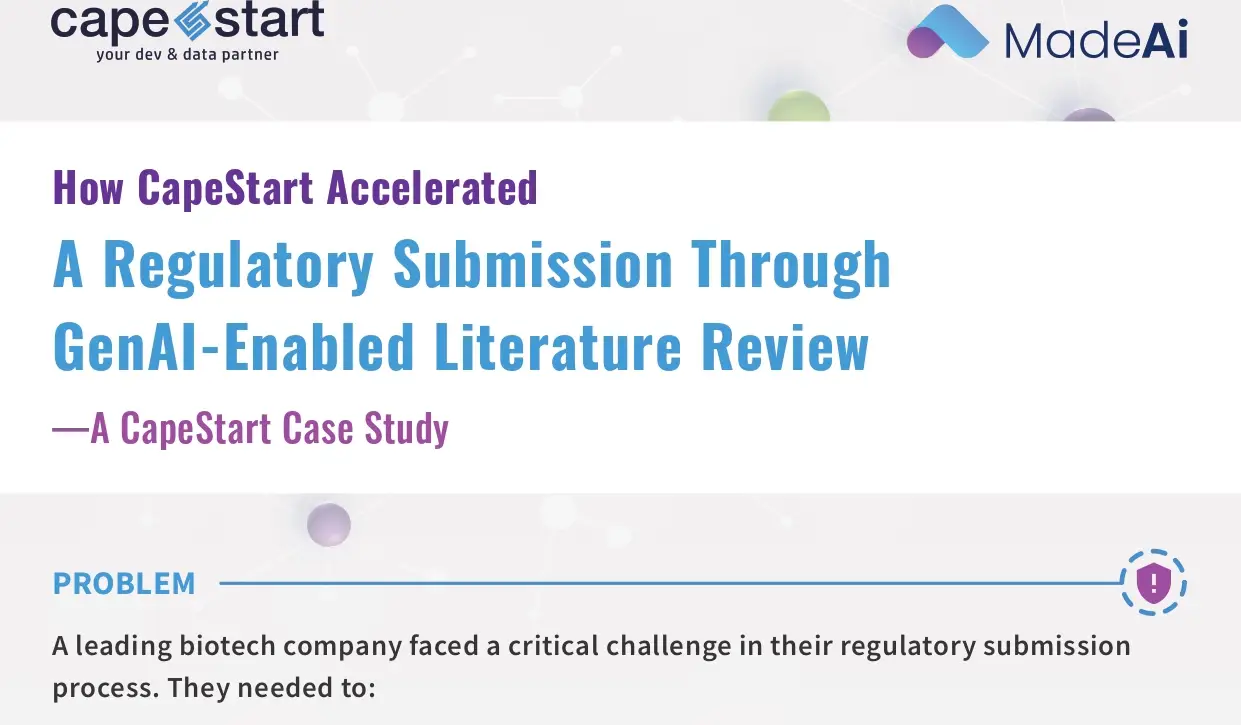
A leading biotech company, faced critical challenges in their regulatory submission process. They needed to conduct a comprehensive clinical literature review and create a Clinical Evaluation Report (CER) with limited time and resources.
The biotech company turned to CapeStart, who provided a hybrid approach combining expert analysis with their GenAI-powered MadeAi™ platform for literature review. Check-out…
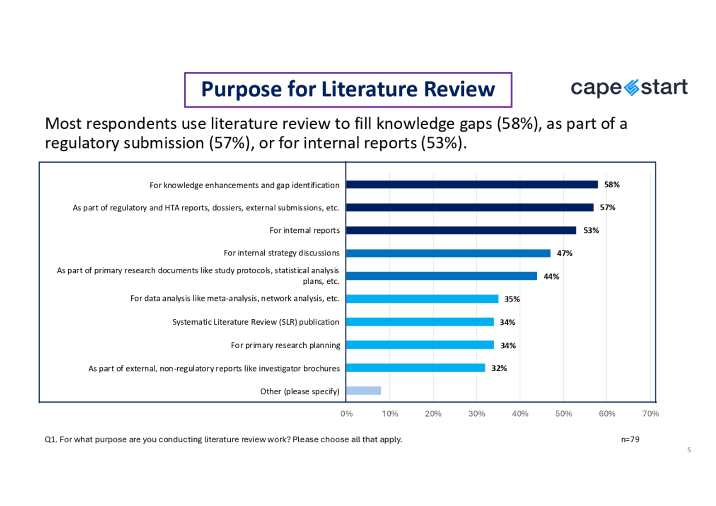
CapeStart's Literature Review Research Report examines how life sciences professionals approach literature reviews, exploring their methodologies, challenges, and resource allocation between internal and external teams. The study investigates key aspects including goals, scope, complexity management, and success metrics, while also analyzing information sources and professional associations, along with demographic data from survey respondents.