


Every professional in the life sciences knows the feeling: literature review is challenging, time-consuming, and above all, exhausting. This essential step in research can feel like a massive hurdle, slowing down innovation and consuming countless hours. Recognizing this frustration, MadeAi developed MadeAi-LR, a powerful GenAI-enabled solution designed to transform the literature review process. It provides the stability of an award-winning, end-to-end platform, combined with the irreplaceable knowledge of experts who specialize in optimizing AI for efficiency. The outcome is huge savings in time. It is saving customers 60% of time on their literature review routinely, but without sacrificing quality or transparency. 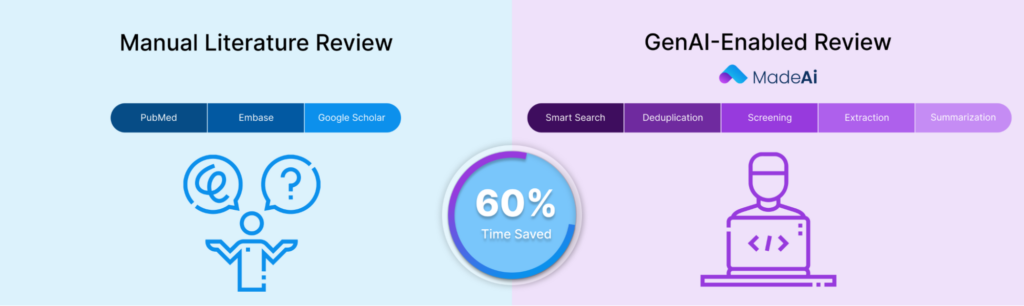 Finding the literature itself is now centralized and simple. The platform’s Smart Search integrates multiple essential databases such as PubMed, Embase, Google Scholar, and the Cochrane Library, allowing for thorough searches without having to jump across various external sites. Once the results are in, the system handles the cleanup through Deduplication, automatically sorting unique studies from the duplicates. For the reviewer, convenience is key. MadeAi-LR offers the ability to manage and purchase full-text articles directly within the platform, thanks to an integration with RightFind, saving valuable time spent navigating external sources.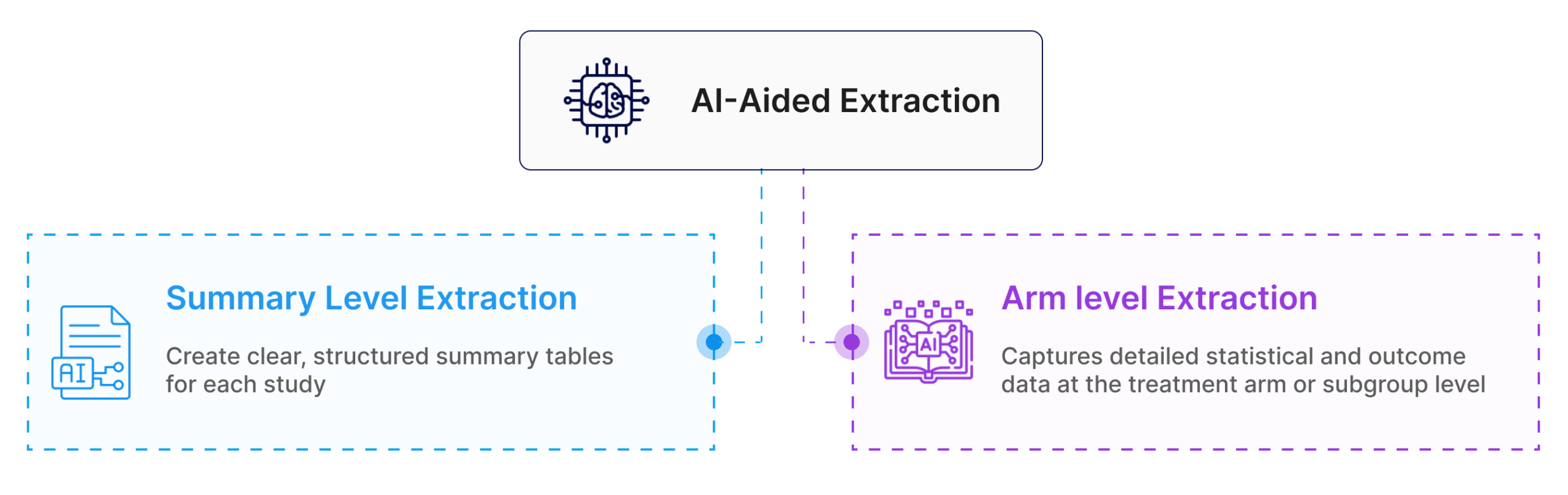
MadeAi—Unified Platform for Seamless Collaboration
The first major challenge in any comprehensive review is coordination. MadeAi-LR addresses this by providing a robust, centralized collaboration platform. This isn’t just a place to store articles. It’s a hub where the entire research team can thrive. The users can leave comments, apply tags, easily change roles, and track progress in real-time, eliminating miscommunication and enhancing workflow efficiency. Finding the literature itself is now centralized and simple. The platform’s Smart Search integrates multiple essential databases such as PubMed, Embase, Google Scholar, and the Cochrane Library, allowing for thorough searches without having to jump across various external sites. Once the results are in, the system handles the cleanup through Deduplication, automatically sorting unique studies from the duplicates. For the reviewer, convenience is key. MadeAi-LR offers the ability to manage and purchase full-text articles directly within the platform, thanks to an integration with RightFind, saving valuable time spent navigating external sources. AI Accuracy for Screening and Evidence Extraction
The power of GenAI is integrated throughout the most tedious steps of the review process. During the initial screening phase, GenAI-aided Screening utilizes a research-oriented framework to quickly identify relevant studies, achieving an impressive 90% accuracy for Title & Abstract Screening. Once studies are selected, the platform’s AI-Aided Extraction capabilities take over the heavy lifting of data synthesis: - Summary-Level Extraction automatically generates clear, structured summary tables for each study, capturing all essential details and providing full contextual traceability to minimize manual work.
- Arm-Level Extraction goes deeper, enabling the detailed capture of statistical and outcome data at the treatment arm or subgroup level. This transparency supports robust comparative and subgroup analyses.
Trust, Quality, and Compliance
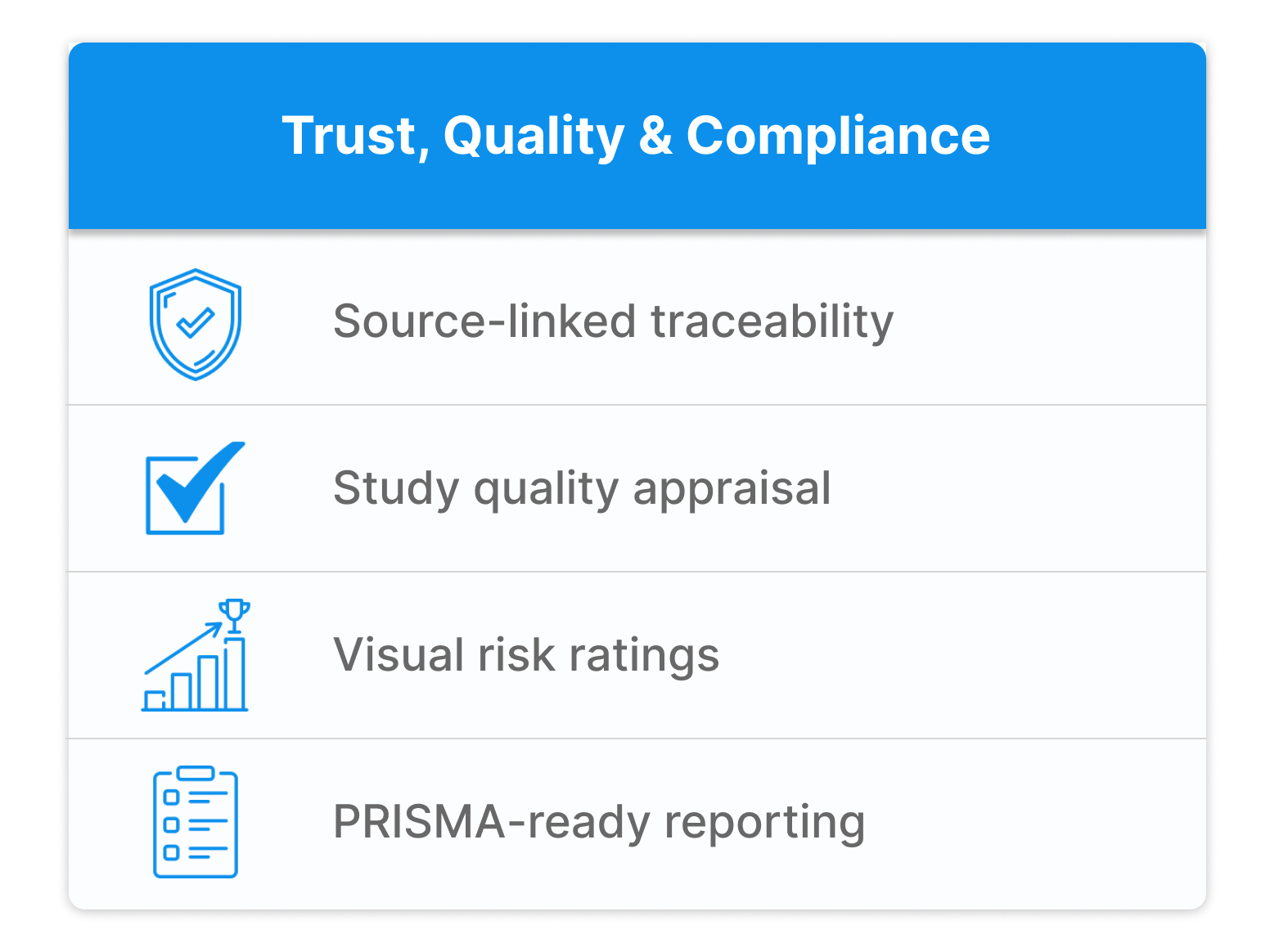
In life science research, quality and verifiability are paramount. MadeAi-LR ensures trust by integrating transparency features: - Traceability is built into the AI-driven steps. When the system makes a prediction during screening or extraction, it highlights the rationale and pinpoints the exact source within the article PDF. This assists expert verification and streamlines the review process.
- Quality Appraisal helps reviewers quickly assess study quality from full-text PDFs, offering visual outputs, domain-specific questions, and an overall risk rating, significantly reducing manual effort in assessment.
Humans and AI Working Together
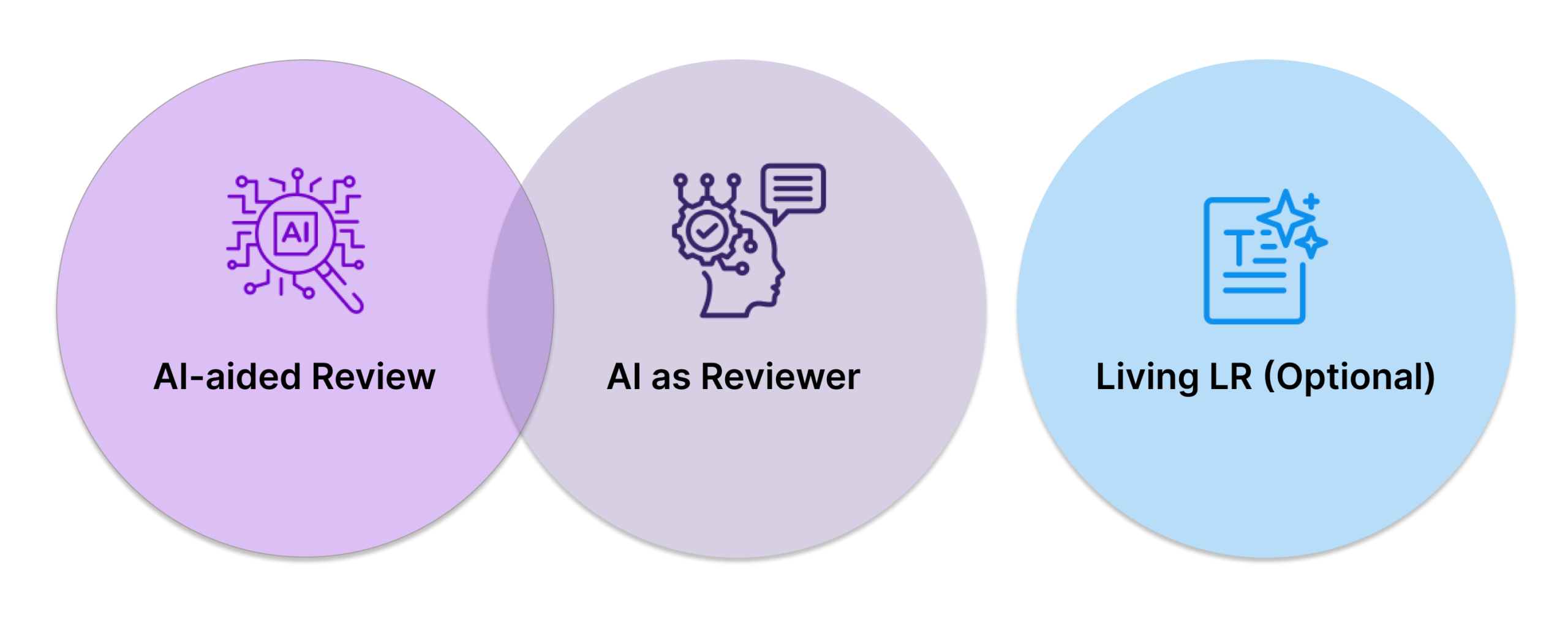
MadeAi-LR integrates AI directly into the reviewer workflow, offering flexible approaches to maximize efficiency: - AI-aided Review: For both Title & Abstract and Full-text Screening, AI-generated suggestions are shared with two blinded human reviewers, leading to faster, more informed decisions.
- AI as Reviewer: In this mode, one human reviewer works in parallel to the AI, which serves as the crucial second reviewer. MadeAi sifts through the articles, tagging them as likely relevant or irrelevant, and providing an explanation for each decision, significantly reducing manual workload.
The Human Expertise Distinction
The true value of this solution comes from MadeAi’s AI-Powered Expert Services. The team understands that simply applying AI isn’t enough; optimizing it for literature review requires a nuanced approach with an experienced partner leveraging a proven platform. While AI saves time in manual areas, subject matter expertise remains critical for necessary validation points throughout the process. MadeAi supports teams in adapting traditional formats, updating methodologies, and embracing the greater efficiency that comes from fundamentally rethinking the AI-accelerated workflow. This partnership is what ultimately drives real-world impact.Market Assessment of Existing GenAI Solutions
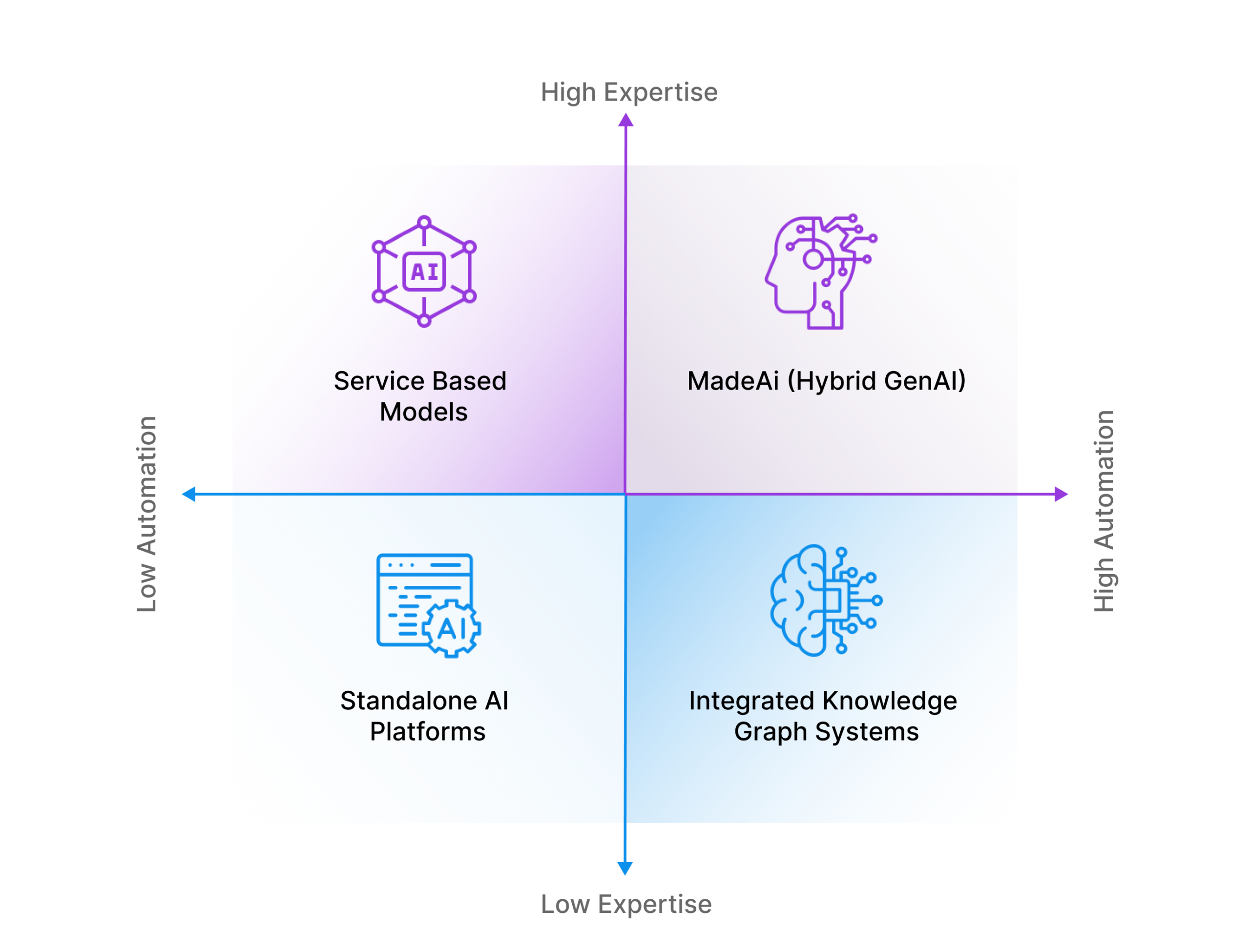
The life sciences AI market includes standalone platforms for text mining and reviews, integrated analytics tools for Real-World Evidence (RWE) and clinical trials, service-based models for regulatory and quality support, and collaborative web tools for systematic reviews. MadeAi’s hybrid GenAI platform with embedded services provides distinct advantages, bridging gaps in automation, expertise, and affordability. Types of Solutions
- Standalone AI Platforms: These are software-focused tools that users access via web interfaces or apps. They emphasize self-service automation for individual researchers or small teams.
- Integrated Knowledge Graph Systems: Combining AI with curated databases, these handle complex queries by linking multi-omics data, patents, and literature for deeper insights.
- Service-Based Models: Offered by consulting firms or specialized providers, these involve expert teams using AI to deliver customized reviews, often for large pharma companies.
- Hybrid Platform Services: A blend where a core platform is augmented by professional services for optimization, training, and support.
| Feature | Standalone AI Tools | Analytics Platforms | Expert Services | Collaborative Web Tools | MadeAi (Hybrid GenAI) |
|---|---|---|---|---|---|
| Focus Area | Quick scans and summaries for submissions | Deep data insights and text mining | Custom trial and regulatory support | Structured screening for reviews | Full GenAI for reviews, dossiers, and medtech with expert support |
| AI Adoption | Basic extraction, limited advanced AI | Strong analytics, weak on content creation | Little AI, human-driven | Basic automation, no advanced GenAI | Advanced AI with fine-tuned models and copilot features |
| Speed | Saves some time, needs human checks | Fast for analytics, slow setup | Slow, depends on experts | Good for screening, slow synthesis | Cuts time 50%+ (e.g., reviews in days) |
| Cost | Affordable but pricey for extras | High for data features | Expensive expert fees | Cheap but limited scale | Lower costs, flexible plans |
| Integration | Basic APIs, not enterprise-ready | Good for data, rigid elsewhere | Custom but not scalable | Limited to review tools | Seamless APIs for CRMs, apps, and custom models |
| Expertise & Compliance | Limited support; some AI gaps | Compliant but less traceable | Strong oversight, less AI | Compliant but not expert-led | PhD-led team, traceable AI for regulations |
| Edge | Good for basics, lacks depth | Great for insights, not GenAI-focused | Regulatory strength, costly | Academic-friendly, misses automation | Blends automation, expertise, and pharma partnerships for good results |