Overview AI vs. traditional systematic literature reviews (SLRs) is a question evidence teams now face daily, not just in academic debate. An SLR is a structured process for reviewing available research on a defined question. It includes identifying, screening, appraising, and synthesizing relevant studies. It follows a pre-registered protocol, such as the one described in…

Overview The future of Systematic Literature Reviews (SLRs) depends on thoughtful integration of technology rather than complete replacement of expert judgment. SLRs remain the foundation for reliable evidence synthesis across healthcare, technology assessment, and policy. The volume of published studies continues to expand, placing heavy demands on research teams that must deliver timely, transparent, and…
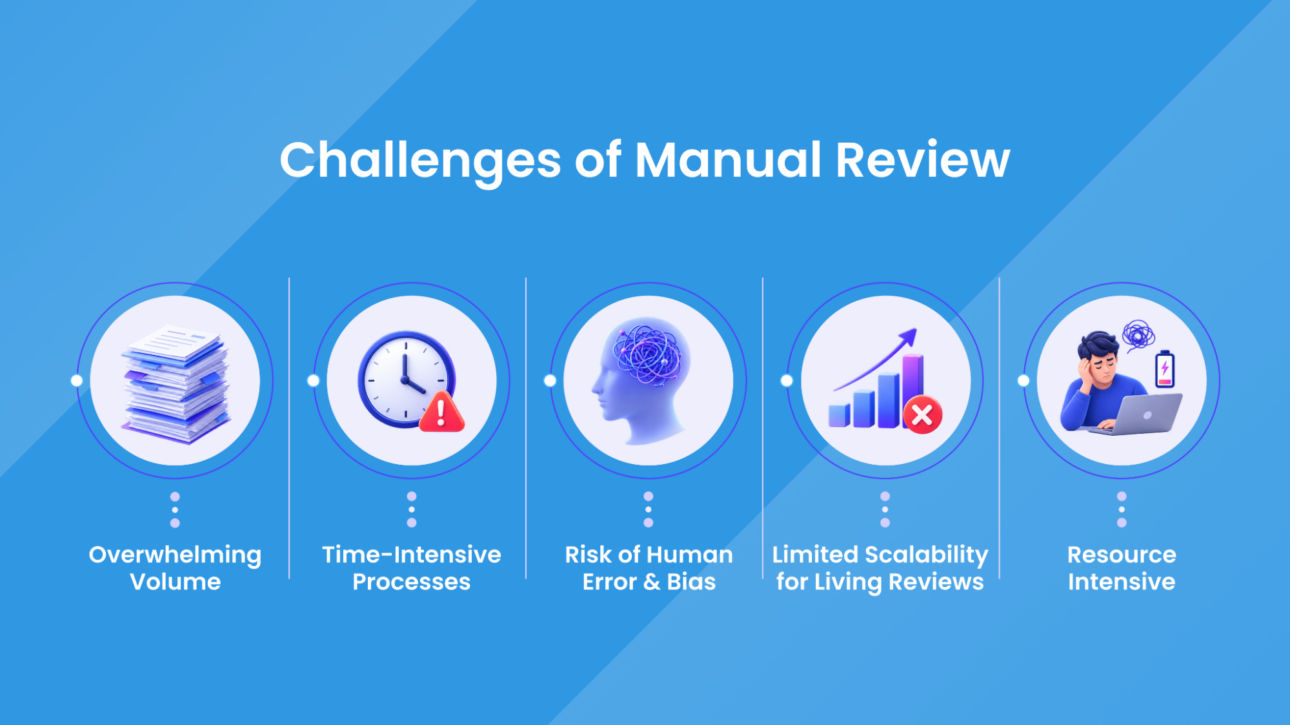
What Manual Literature Reviews Cost, and Where the Money Goes Manual systematic literature reviews remain the backbone of evidence-based decisions in healthcare, policy, and research. Teams follow strict protocols, search multiple databases, screen thousands of records, extract data by hand, and synthesize findings. The method delivers high-quality results. Yet the true price of this work…
Why the Systematic Literature Review Timeline Still Runs Into Months A typical systematic literature review (SLR) timeline is measured in quarters, not weeks, and the reason is rarely a lack of effort. Borah and colleagues tracked reviews registered on PROSPERO and found a median of 67.3 weeks from registration to publication (BMJ Open, 2017). As…
Consider a cross-functional team huddled around spreadsheets, regulatory guidelines, and past trial data, spending weeks or sometimes months crafting a single clinical trial protocol; see protocol structure details. Every inclusion criterion, endpoint, and safety measure must align perfectly with ICH-GCP standards, FDA expectations, and real-world feasibility. One misalignment, and you risk costly amendments, delayed starts,…
Background: Scientific Data Review Evidence volumes are rising, but review teams are not. In 2010, the scientific community published roughly 75 trials and 11 systematic reviews daily, and this pace has only accelerated. Today, more than 200 new systematic review protocols are registered in PROSPERO every day, illustrating how demand for evidence synthesis has outpaced…